Outdoor TVs: SunBriteTV, Samsung Terrace, and Alternatives
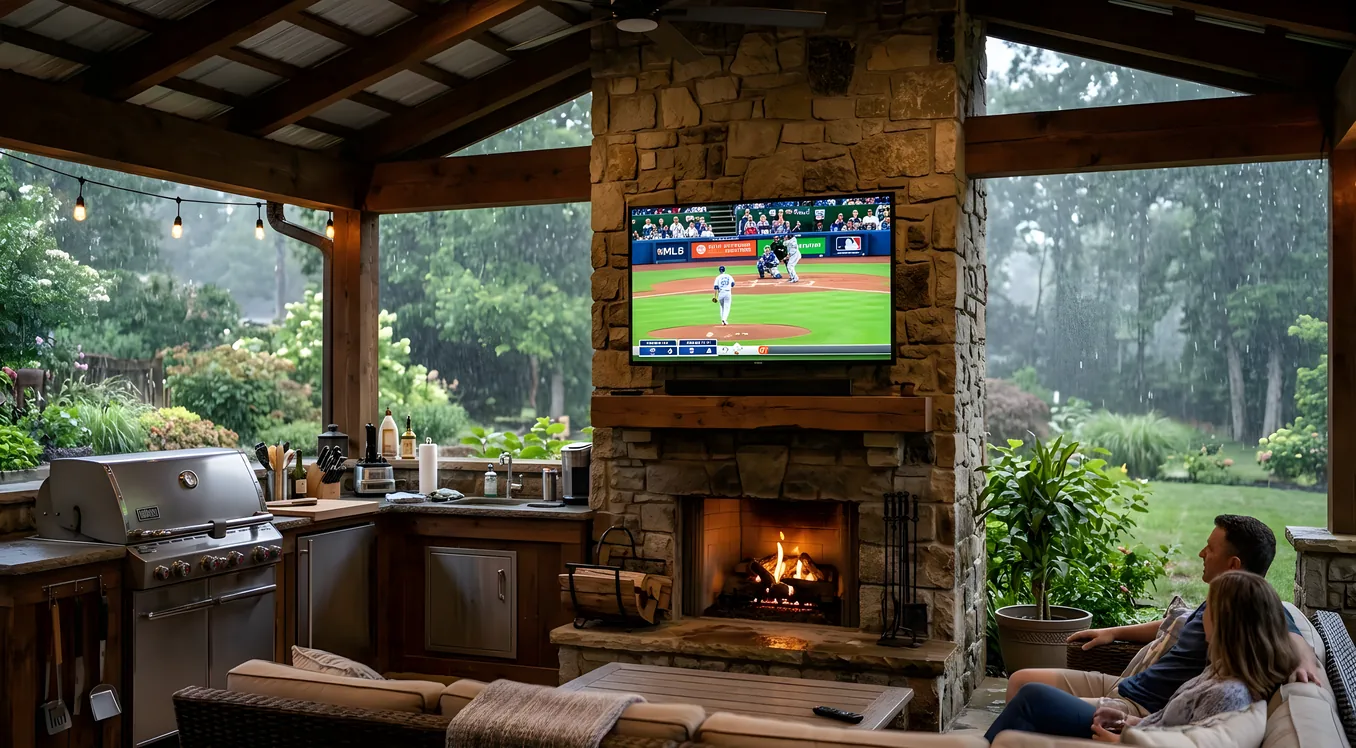
Taking a television outside sounds simple until you realize that a standard living room TV will fail within a season. The sun washes out the picture, humidity warps the electronics, insects find their way inside the enclosure, and temperature swings crack the screen. Outdoor TVs exist as a dedicated product category because the engineering requirements are genuinely different, and the difference between a proper outdoor TV and a “water-resistant” indoor TV repurposed for a patio shows up in year two when one of them is still working and the other is not.
This guide covers what actually separates outdoor TV options, which manufacturers are worth considering, and how to match a product to your specific installation conditions. If you are building out an outdoor entertainment space or integrating an outdoor display into a broader smart home system, this is where to start.
What Makes an Outdoor TV Different
The core engineering challenge for outdoor televisions is simultaneous exposure to heat, moisture, cold, UV radiation, and insects. Each of these degrades standard TV components in different ways.
Brightness is the most visible difference. Outdoor ambient light levels measure between 1,000 and 100,000 lux depending on direct sun exposure. A living room TV typically produces 250 to 500 nits of peak brightness. Even a bright high-end indoor display at 1,000 to 1,500 nits will look gray and washed out in direct afternoon sun. Proper outdoor TVs for full-sun installations produce 1,500 to 4,000 nits, with some commercial-grade options going higher. Shade-specific outdoor TVs, designed for covered patios and pergolas, operate in the 700 to 1,000 nit range.
Weatherproofing is rated via IP (Ingress Protection) codes. The number after IP tells you about dust and particle protection (first digit, scale 0-6) and water protection (second digit, scale 0-9). Most dedicated outdoor TVs carry IP55 ratings, meaning protected against dust ingress and protected against water jets from any direction. Better units achieve IP65 (fully dust-tight) or IP66 (dust-tight plus high-pressure water jets). If your installation is covered and never exposed to rain directly, IP ratings matter less. An open exposed installation in a wet climate needs IP66 or better.
Temperature range is a spec most buyers overlook. Standard TVs are rated for 32°F to 104°F operating range. Outdoor TVs typically extend that to 14°F to 140°F or even -22°F to 140°F in the cold-rated models. If you are in Minnesota or Colorado, the cold-rated spec matters. A screen that sits at 10°F all winter needs a different internal heater design than one in Phoenix that only has to deal with heat.
Anti-glare treatment on the panel itself reduces reflections from ambient light sources. This is different from brightness. Even a 3,000-nit display can be difficult to watch if the glass surface acts as a mirror reflecting the sky or a light fixture behind the viewer.
SunBriteTV: The Long-Running Standard
SunBriteTV has been making dedicated outdoor televisions longer than almost anyone else in the category. Their products are manufactured specifically for outdoor use, not adapted from indoor chassis, and the engineering reflects that heritage.
Their line divides into three main product families based on installation environment.
The Veranda Series targets covered patios and screened-in porches where the TV never sees direct sun or rain. Sizes run from 43 inches through 65 inches, with models like the SB-V-43-4KHDR producing around 700 nits. These are 4K HDR panels with a weatherized enclosure rated for -24°F to 122°F. Street pricing runs roughly $1,000 to $1,500 depending on size and retailer.
The Pro Series (previously called Signature) steps up to full-sun applications. The 65-inch SB-P-65-4KHDR produces 1,500 nits and is fully weatherproofed for direct rain exposure. A 55-inch Pro Series runs around $2,500 to $3,000. The 75-inch model pushes past $5,000.
The Marquee Series sits at the top with 2,500 nits and is built for the most demanding direct-sun installations, including poolside and fully exposed environments. These carry a higher price premium.
One consistent strength with SunBriteTV is build quality that holds up over multiple years. The company has a track record of products that are still operating at year five and year seven in demanding installations, which is not universally true across the outdoor TV market. The trade-off is that the picture quality, while perfectly good, trails the best indoor panels from LG OLED or Samsung QLED on color accuracy and contrast. You are buying durability and brightness first. Picture fidelity comes second.
SunBriteTV products integrate cleanly with smart home control systems. They support RS-232 control via the SB-ARS-232 adapter, making them compatible with Control4, Savant, Crestron, and other professional AV control platforms. If you are working with an integrator to build out a broader outdoor audio and video system, SunBriteTV’s RS-232 and IP control support is a significant practical advantage.
Samsung The Terrace: Consumer Premium Outdoor
Samsung entered the outdoor TV market with The Terrace, which takes a different approach than SunBriteTV. Rather than prioritizing durability-first engineering, Samsung built an outdoor TV with picture quality closer to their flagship indoor QLED displays and added weatherproofing as a secondary design constraint.
The Terrace runs on Tizen OS, which is the same smart TV platform as Samsung’s indoor lineup. You get built-in streaming apps, voice control via Bixby, and compatibility with Samsung’s SmartThings ecosystem. If you are already in the SmartThings environment for indoor TVs or smart home devices, the integration is straightforward.
Brightness on The Terrace is rated at 2,000 nits, which handles covered patio conditions and lightly shaded areas well. In direct southern-exposure afternoon sun, it can look somewhat washed out compared to SunBriteTV’s full-sun Pro or Marquee series. Samsung targets The Terrace at covered outdoor spaces rather than fully exposed installations.
The IP55 weatherproofing rating handles rain exposure for covered installations but is not designed for poolside splash zones or high-moisture environments. Samsung rates The Terrace for operating temperatures of 32°F to 104°F, which is narrower than SunBriteTV’s range. That matters in cold climates.
Picture quality is where The Terrace earns its price premium. The QLED panel with Samsung’s Neo QLED processing produces better color volume, better HDR handling, and more natural motion than SunBriteTV’s panels. If your installation is a covered patio in a moderate climate and you watch a lot of sports in 4K HDR, the picture difference is real and noticeable.
The Terrace comes in 55-inch, 65-inch, and 75-inch sizes. Pricing runs from around $2,500 for the 55-inch to $5,000 and above for the 75-inch. Samsung also sells a matching outdoor soundbar, The Terrace Soundbar (HW-LST70T), rated for outdoor use and designed to pair acoustically with the TV.
One practical consideration: Samsung’s outdoor warranty terms are different from their indoor TV warranty. Read the fine print on what conditions are covered, particularly if you live in a climate with extreme temperature swings.
LG Objet Collection POSÉ: The Art-Forward Option
LG’s outdoor TV offering takes a distinctly different aesthetic angle. The POSÉ is designed to be visible even when off, with a fabric cover built into the design. It targets design-conscious buyers who want an outdoor display that does not look like an industrial product bolted to a wall.
Brightness is 2,000 nits, in the same range as The Terrace. The 65-inch POSÉ retails around $3,000. LG uses their QNED (Quantum NanoCell Emitting Diode) panel technology rather than OLED for the outdoor application, which is the right call given heat sensitivity of OLED panels in direct sun.
The POSÉ includes webOS, LG’s smart TV platform, with ThinQ AI and built-in streaming apps. LG’s smart home integration is less comprehensive than Samsung’s SmartThings ecosystem but works with Google Home, Amazon Alexa, and Apple HomeKit.
The aesthetic design is genuinely differentiated. If the installation context is a high-end outdoor living space where the TV needs to look intentional, the POSÉ is worth serious consideration. If the priority is maximum durability or brightness, it is not the right product.
SolarEdge (Séura): High-Performance Niche
Séura is a Wisconsin-based manufacturer that makes outdoor and bathroom TVs with a focus on high-end residential installations. Their Shade Series is designed for covered patios and shade structures, while the Storm Ultra is built for full-sun, direct-weather exposure.
The Storm Ultra produces up to 4,000 nits, which is among the highest brightness ratings available in the residential outdoor TV market. At that brightness level, the display is readable even in direct afternoon sun on south-facing installations. The Storm Ultra also carries an IP68 rating (completely dust-tight, submersible to 1.5 meters), which is the highest weatherproofing rating available in this category.
Séura products are distributed primarily through custom AV integrators rather than retail channels. If you are working with a professional installer or integrating the display into a larger distributed video system, Séura is worth asking about. Pricing reflects the professional channel, with the Storm Ultra running $4,000 to $8,000 depending on size and configuration.
Terra (SunBrite vs. Generic Budget Options)
The outdoor TV market has attracted several budget-tier brands selling “outdoor-rated” televisions in the $400 to $800 range. These products typically use modified indoor LCD panels in weatherized enclosures. The spec sheets sometimes look compelling, but real-world durability in multi-year outdoor installations has been inconsistent at best.
The failure modes are predictable: seals degrade, water intrusion causes backlight failure, temperature cycling cracks the panel mount, and insects find paths around inadequate gaskets. A $600 outdoor TV that needs replacing every two to three years is not a bargain compared to a $2,500 SunBriteTV that runs for seven years without issue.
Budget outdoor TVs can make sense for seasonal use in covered, protected spaces where the TV is stored during winter, the climate is mild, and direct weather exposure is minimal. For year-round permanent installation in any demanding environment, the budget tier is generally a false economy.
Choosing Based on Installation Conditions
The right outdoor TV depends more on your specific installation context than on brand loyalty.
Full-sun, direct weather exposure: This calls for a dedicated full-sun product with 1,500 nits minimum (preferably 2,000 or more), IP65 or better weatherproofing, and a broad temperature operating range. SunBriteTV Pro or Marquee, or Séura Storm Ultra, are the appropriate product tier. Plan on a mounting solution with cable management that keeps connections protected.
Covered patio, no direct rain: The majority of outdoor TV installations fall here. The Terrace, SunBriteTV Veranda, LG POSÉ, or even the SunBriteTV Pro all work well. The choice at this tier comes down to picture quality preferences, smart home ecosystem compatibility, and budget. At this level, paying extra for Samsung’s QLED panel or LG’s design makes more sense than in a full-sun environment where brightness overwhelms picture nuance anyway.
Screened enclosure or lanai: Screened spaces reduce direct weatherproofing requirements significantly. A 700-nit display is adequate if the screen blocks most ambient sunlight. The SunBriteTV Veranda at this installation type is a practical choice. You may also find that indoor TVs in weatherized enclosures (from manufacturers like StowAway or Sundown) work in this context, though purpose-built outdoor TVs still offer better longevity.
Climate considerations: If you are in the Midwest or Mountain West and the TV stays outdoors year-round, cold-rated models matter. SunBriteTV’s cold rating down to -24°F covers most US climates. If you are in a coastal environment with salt air, look specifically for corrosion-resistant materials in the enclosure and hardware, not just waterproofing ratings.
Smart Home Integration for Outdoor TVs
An outdoor TV in isolation is less useful than one integrated into a whole-home system. The most capable outdoor installations allow the same source content to appear on the outdoor display as on indoor screens, controlled through a single interface.
Control systems from Control4, Savant, and Crestron support outdoor TV control via IP or RS-232, the same protocols used for indoor AV equipment. A well-integrated system lets you control the outdoor TV from the same app or keypad you use for indoor rooms, manage volume on paired outdoor speakers, and trigger automation scenes, such as turning on the outdoor display when you unlock the back door.
For source distribution, an outdoor TV can pull from the same video distribution backbone as indoor screens. If your home uses a distributed video system, your outdoor display can be another zone, with access to satellite, cable, Apple TV, Roku, or any other source in your rack. This is how integrated outdoor entertainment spaces work: the TV is just another endpoint on a coherent system, not a standalone device with its own source library.
Pairing the outdoor TV with an appropriate audio system matters as well. A display at 2,000 nits sounds great until you realize the built-in speakers are inaudible at a backyard party. Dedicated outdoor speakers, whether landscape speakers buried around a lawn or in-wall speakers in a covered patio structure, are essential. If you are exploring outdoor speaker options alongside the TV, the broader outdoor audio and video decisions belong in the same planning conversation.
Mounting, Power, and Cable Considerations
Outdoor TV installation has several practical dimensions that affect long-term performance.
Mounting: Outdoor-rated TV mounts are made from stainless steel or hot-dip galvanized steel to resist corrosion. Standard indoor mounts will rust within a season in moist environments. For fully articulating mounts, SANUS and Peerless-AV both make outdoor-rated options. Plan for mast or wall construction that can actually support the mount, particularly if you want to swing a 75-inch display.
Power: Outdoor TV circuits should run on dedicated 20-amp circuits with outdoor-rated GFCI protection. Backyard wiring run by an electrician is the correct approach. Extension cords and shared circuits create failure points and safety hazards.
Cables and connections: HDMI cables and signal cables run to outdoor TVs need weatherproofed conduit or in-wall routing to protected enclosures. Exposed cable runs, even with UV-resistant jackets, degrade. The connection point at the TV is typically the most vulnerable. Check your chosen model’s input cover design before purchasing.
Cooling: Outdoor TVs in direct sun accumulate heat even with internal thermal management. Mounting in a way that allows airflow around the unit, avoiding enclosed cabinets, makes a meaningful difference in longevity. Some high-end installations include powered ventilation in outdoor equipment enclosures.
What These Displays Cost at Different Tiers
Budget-tier outdoor TVs (budget brands, 55 to 65 inches): $400 to $900. Appropriate for seasonal covered use only.
SunBriteTV Veranda (covered patio, shade): 43-inch at around $900, 65-inch at around $1,400.
Samsung The Terrace (covered patio, direct weather capable): 55-inch around $2,500, 75-inch around $5,000.
SunBriteTV Pro Series (full-sun, all weather): 55-inch around $2,500, 65-inch around $3,500, 75-inch around $5,500.
LG POSÉ (covered, design-forward): 65-inch around $3,000.
Séura Storm Ultra (full-sun, extreme weatherproofing): 55-inch to 75-inch range from $4,000 to $8,000.
These prices fluctuate, and professional integrators often access different pricing through distribution channels than retail buyers. If you are having a full outdoor space designed by an integrator, ask for the total installed cost including mounting, wiring, and integration, not just the display price.
Getting the Right Outdoor TV for Your Space
The decision tree is actually fairly simple once you define your conditions.
Start with sun exposure: full sun or shade-only? That single variable narrows your brightness requirements and often eliminates half the product field. Then consider climate and temperature range. Then decide how important smart home integration and control system compatibility are to you. Finally, evaluate picture quality and design priorities within whatever remains.
For most covered-patio installations in moderate climates, the Samsung Terrace 55-inch or 65-inch is an excellent all-around choice if picture quality and smart features matter. For full-sun or demanding weather environments, SunBriteTV Pro or Séura are the right products regardless of the premium. For high-design installations, LG POSÉ is differentiated in a way that no other product matches.
What to avoid is letting price guide the decision downward in situations where the installation conditions are demanding. A full-sun poolside installation with a budget outdoor TV is going to disappoint in ways that a proper full-sun display would not. Matching the product tier to the actual installation environment is how outdoor TV buyers avoid replacement costs within the first few years.
If the outdoor display is part of a broader smart home build, align the TV choice with your control system before purchasing. Not every outdoor TV integrates cleanly with every platform, and confirming control compatibility before the purchase is far simpler than troubleshooting it after installation. An integrator who has built outdoor entertainment spaces before will have opinions about which products work reliably in professional installations, which is worth more than any specification sheet.