Control4 vs Savant: Which System Fits Your Home
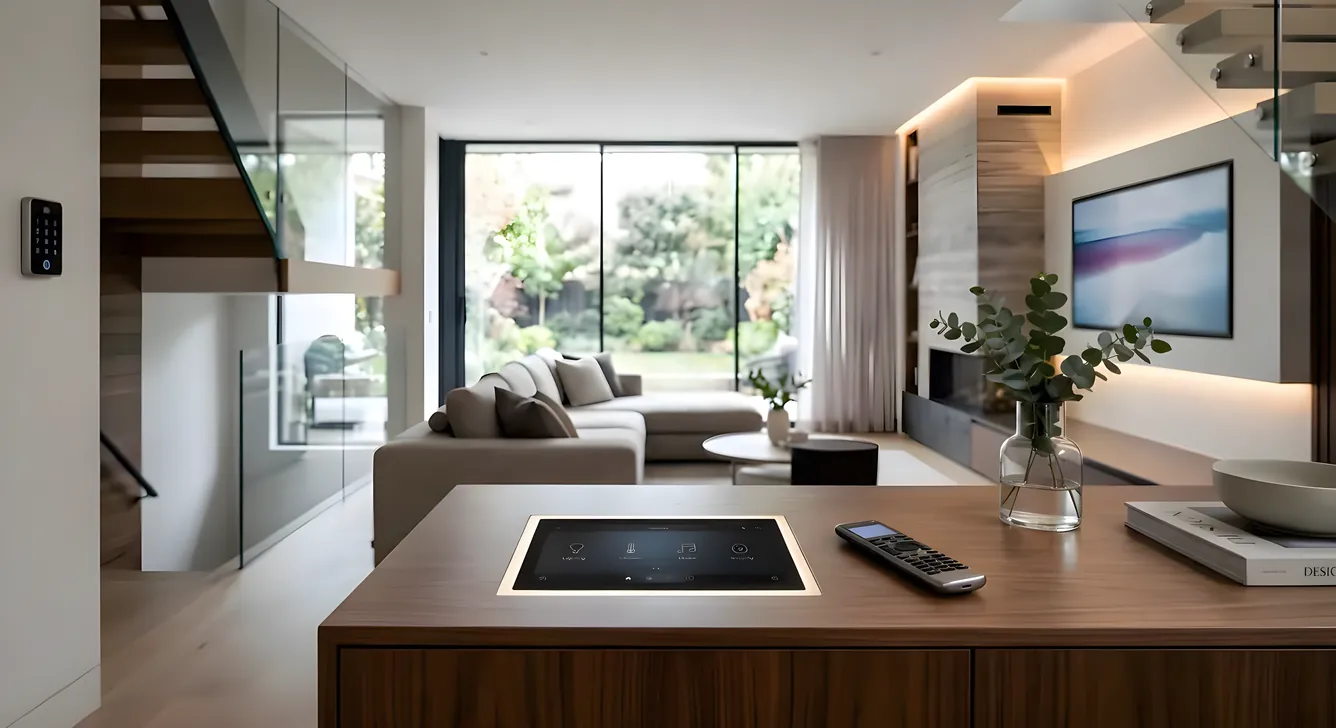
Both Control4 and Savant are professional-grade smart home systems that you cannot buy off a shelf. They require a certified dealer to design, install, and configure them. They both promise to unify lighting, HVAC, audio/video, security, and more under a single interface. And they both cost significantly more than self-installed alternatives like Google Home or Apple HomeKit.
So if the price range is roughly similar and the category is the same, why does the choice between them matter so much? Because under the surface, these systems work very differently, serve different homeowner profiles, and have meaningfully different total costs, hardware options, and long-term support implications.
This comparison is written for homeowners who are past the “should I get a professional system” question and are now trying to figure out which one to actually buy.
What Each System Actually Is
Control4 is a Utah-based company (acquired by SnapAV in 2019, then rebranded under the Snap One umbrella) that built its reputation as the value-oriented professional automation platform. “Value-oriented” in this context means starting projects around $10,000 to $20,000 for a whole-home system rather than $50,000+. Control4 runs on proprietary hardware including the CA-1 and EA series controllers, and its software is deeply tied to Composer Pro, the programming environment that certified dealers use to configure everything.
Savant is a Massachusetts-based company that started as a Mac-native automation platform in 2005 and has positioned itself firmly at the ultra-premium end of the residential market. Savant systems typically start higher (often $25,000 to $50,000 for a full home), and the company has vertically integrated over the years to produce its own lighting controls (Savant Lighting, formerly known as GE Lighting’s smart home division), audio equipment under the Savant Audio brand, and power management hardware. If Control4 is the system integrators reach for on a $1.5 million home, Savant tends to appear in homes with $3 million+ budgets.
Neither of those numbers is absolute. A modest Control4 project can run $8,000. An expansive Savant retrofit can hit six figures. But they reflect the general market positioning each company has carved out.
Hardware and Controller Architecture
This is where the two systems diverge most noticeably at a technical level.
Control4’s controller lineup includes the CA-1 (a compact entry-level controller at roughly $500), the EA-1, EA-3, and EA-5 controllers (ranging from about $600 to $1,500), and the HC-800 for legacy installs. For most whole-home projects, integrators use an EA-3 or EA-5 as the primary controller. These are rackmount devices that live in a utility closet or equipment rack. The EA-5 can handle 100 rooms and 100 connections natively. Control4 also owns Triad speakers, which integrators frequently spec alongside the core system.
Control4’s OS 3 platform supports over 14,000 third-party device drivers, which is a genuine competitive advantage. If you have Lutron RadioRA 2 dimmers, a specific Denon receiver, a Liftmaster garage opener, or a Pentair pool controller, there is almost certainly a Control4 driver for it. This breadth of integration is why many integrators default to Control4: almost nothing falls outside its reach.
Savant’s architecture centers around the Savant Pro Host and Smart Host controllers (previously called the SSC-30 and similar models). The current Pro system uses Savant’s RacePoint Blueprint software for programming. Savant controllers are generally priced higher than equivalent Control4 hardware. Where Savant differentiates itself is in its vertical integration: the Savant App (available on iOS and Android) is widely considered to have a more polished interface than Control4’s app, and Savant’s own Lighting and Audio products are designed to work natively with the platform rather than through driver integrations.
Savant has also invested heavily in its Savant Power system (acquired from Dragonfly Energy concepts), which integrates battery backup, solar, and whole-home energy management into the automation platform. This is currently unique to Savant among residential automation platforms and meaningful for homeowners in areas with unreliable grid power or who want energy monitoring integrated into their automation.
The App and Daily User Experience
For most homeowners, the daily interaction with either system is through a touchscreen panel, a physical remote, a mobile app, or voice control. This is where many people say Savant has a meaningful edge.
The Savant app (iOS and Android) has received consistent praise for its visual design and speed. Customizable room cards, scene thumbnails, and a clean layout make it genuinely pleasant to use. Savant’s S-Remote (the Pro Remote 2) is a well-regarded physical remote with a touchscreen and haptic buttons, priced around $600 to $800.
Control4’s MyHome app is functional and has improved substantially with OS 3, but it has historically been described as utilitarian rather than elegant. Control4’s touchscreens (the T3 series, ranging from 5-inch to 10-inch panels at $800 to $2,000) are solid, and the SR-260 remote ($200) covers basic A/V control well. Control4 also integrates with Josh.ai: The Privacy-First Voice Control System for natural language voice commands that stay local rather than routing through cloud servers, which appeals to privacy-conscious homeowners.
The honest take: most homeowners adapt to whichever app they have and stop comparing after a few weeks. But if someone in your household is going to use the app frequently and cares about the experience feeling premium, Savant wins on aesthetics.
Lighting Control Integration
This is a meaningful difference that gets overlooked in surface-level comparisons.
Control4 relies on third-party lighting control companies for most projects. Lutron is the most common pairing: specifically Lutron RadioRA 2 or Lutron Homeworks QS for higher-end builds. Lutron dimmers are excellent, reliable, and well-supported. The integration with Control4 is tight. A full Lutron Homeworks QS installation adds $15,000 to $50,000 to a project depending on the number of fixtures and zones, but the reliability and dimming quality (especially with LED loads) is difficult to match.
Some integrators use Ketra, a Lutron brand that supports tunable white and full-color lighting, for wellness-focused projects where circadian rhythm control matters.
Savant acquired GE Lighting’s smart home division in 2021 and now sells its own Savant Lighting line, including dimmers, keypads, and occupancy sensors. The appeal is single-vendor simplicity: one company, one support call, one app. Savant Lighting uses a proprietary bus protocol and is generally priced comparably to Lutron RadioRA 2. For homeowners building new construction or doing a full renovation, Savant’s integrated lighting story is compelling. For retrofit projects with existing Lutron hardware, Control4 may be easier to integrate without ripping out what’s already there.
Third-Party Device Compatibility
This is where Control4 wins clearly for most homeowners.
The 14,000+ certified driver library means Control4 can integrate with almost every major smart home product: Nest and ecobee thermostats, Ring and other security cameras, Sonos speakers, Lutron lighting, Pentair and Jandy pool equipment, Savant Audio (yes, Control4 can control Savant Audio components), virtually any A/V receiver, projector, or matrix switch with an IP or RS-232 port.
For a homeowner who bought a Sonos system last year, already has a Nest thermostat, and wants to tie it all together without replacing hardware, Control4 is the more pragmatic path. You can read more in the Control4 Smart Home System: Complete Buyer’s Guide about which specific product categories have the deepest integration support.
Savant has a narrower driver ecosystem (roughly 3,000 to 5,000 third-party integrations depending on how you count). It covers the major categories well: AV equipment, thermostats, security systems, IP cameras. But it is less likely to have a driver for a niche product, an older component, or a non-mainstream brand. The tradeoff is that Savant’s own hardware (lighting, audio, power) tends to work more seamlessly within the platform than third-party integrations often do.
For homeowners who want one vendor’s ecosystem with tight native integration, Savant makes sense. For homeowners with existing equipment or preferences for specific third-party brands, Control4 is more flexible.
Dealer Networks and Installation
Neither system is DIY-friendly. Both require certified dealers to purchase equipment and perform installation. This matters for two reasons: availability and pricing power.
Control4 has a significantly larger dealer network. Snap One reports over 3,500 authorized dealers in North America. In most metro areas, you can get multiple bids from Control4 dealers, which gives you pricing leverage. In smaller markets, you may still find a local dealer.
Savant has a smaller but more selective dealer network, with roughly 1,500 certified integrators in the US. In major metro areas this is not a problem. In smaller cities and rural areas, you may be working with dealers who travel significant distances for the installation, which adds cost and complicates service calls.
Service call response time matters more than people expect. When the system goes down before a dinner party, a dealer who is 2 hours away is a different situation than one who is 20 minutes away. Ask prospective dealers specifically about their average response time for service calls and whether they offer remote monitoring.
Both Control4 and Savant dealers can typically do remote troubleshooting via cloud access to the controller, which handles a significant percentage of issues without a truck roll.
Total Cost Comparison
Prices vary substantially by market, project scope, and dealer. These are directional ranges, not quotes:
Control4 project costs:
- Entry-level whole-home (lighting, HVAC, A/V in 3-4 rooms): $12,000 to $20,000
- Mid-range (larger home, pool, outdoor, full A/V): $25,000 to $50,000
- High-end (estate, full Lutron Homeworks, custom programming): $75,000 to $150,000+
Savant project costs:
- Entry-level whole-home: $20,000 to $35,000
- Mid-range: $40,000 to $80,000
- High-end: $100,000 to $250,000+
Software licensing adds to both. Control4 requires an annual 4Sight subscription ($10/month or $100/year) for remote access and Alexa/Google voice integration. Without 4Sight, the system works locally but you lose the Control4 app when away from home.
Savant’s remote access is built into the platform without a separate subscription fee, though some features require current software versions that may require paid upgrades from your dealer over time.
Reliability and Long-Term Support
Both systems have strong track records for reliability when properly installed. The failure points tend to be network issues (home Wi-Fi and Ethernet infrastructure problems, not the automation system itself), configuration errors, or hardware that is years out of date.
Control4 under Snap One has faced some criticism around software update cadence and the transition from older hardware (the HC-300/800 series) leaving some customers with systems that required significant reinvestment. The EA series hardware introduced around 2015 is still well-supported, which is a good sign. OS 3 runs on EA and newer hardware.
Savant has a reputation among integrators for strong software quality. The Blueprint programming environment has fewer reported stability issues than Composer Pro, according to many dealers, though this is anecdotal. Savant’s hardware refresh cycles have also been more predictable.
For either system, the practical reliability question is: how good is your dealer at maintaining the system? A well-maintained Control4 system beats a neglected Savant install every time. Ask potential dealers how many of their installs they actively service versus how many they handed off after completion.
Savant vs Control4: Head-to-Head Summary
| Factor | Control4 | Savant |
|---|---|---|
| Entry-level cost | Lower (~$12K) | Higher (~$20K) |
| Third-party integrations | 14,000+ drivers | ~3,000-5,000 |
| Native lighting | Third-party (Lutron) | Savant Lighting (own brand) |
| App/UI quality | Good | Excellent |
| Dealer network size | 3,500+ US dealers | ~1,500 US dealers |
| Energy management | Limited | Savant Power (built-in) |
| Remote access subscription | 4Sight ($100/yr) | Included |
| Best fit | Flexibility, budget-conscious | Premium experience, vertical integration |
Which System Is Right for Your Home
Control4 makes more sense if:
You have a realistic budget under $40,000 for the whole project. You already own Lutron dimmers, a Sonos system, ecobee thermostats, or other quality equipment you want to keep. You need to integrate a product that sits outside the mainstream (a specific AV component, a niche pool controller, a commercial intercom). You live somewhere with multiple local Control4 dealers and want the option to switch dealers if the relationship sours.
Savant makes more sense if:
Budget is not the primary concern and you want the most polished user-facing experience. You are building new construction or doing a complete renovation where you can run all new lighting, AV, and control wiring without compatibility worries. You want energy management (battery, solar monitoring) integrated into your automation platform. You value single-vendor support responsibility rather than coordinating between your automation dealer and your lighting dealer.
There is also a third path worth considering: some homeowners in this price range look at Crestron for enterprise-grade reliability, particularly for very large homes or commercial-residential crossover projects. The Crestron Home Automation: Enterprise-Grade for Residential overview covers where that platform fits relative to Control4 and Savant.
Questions to Ask Your Dealer Before Signing
Before committing to either platform, get specific answers to these questions from any dealer you are considering:
- How many active Control4 (or Savant) installations do you currently maintain in my area?
- What is your typical response time for service calls, and do you offer a service agreement?
- Can you show me a completed project at a similar scope to mine? References from those homeowners?
- What does the system cost to update when new software versions require hardware changes?
- If I am unhappy with your service, can I transfer my system to another dealer? (For Control4: yes, with Snap One account transfer. For Savant: generally yes, with some dealer-specific programming considerations.)
- What is included in your post-installation support, and for how long?
The dealer matters as much as the platform. A skilled Control4 integrator will deliver a better result than a mediocre Savant dealer, and vice versa. Spend as much time evaluating the company as you do evaluating the technology.
Making the Final Call
If you walked into most high-end showrooms and asked a Savant dealer versus a Control4 dealer which system is better, each would say their own. Both answers would be defensible. These are genuinely strong platforms with different strengths.
The honest framework: if you are spending under $35,000 on a whole-home project, Control4 is likely the right call. Its driver ecosystem is deeper, the dealer network gives you more options, and the cost structure works better at that project size. If you are spending over $50,000, the gap narrows and Savant’s vertical integration, app polish, and energy management features become more meaningful relative to the incremental cost.
Whatever you choose, get three quotes, check dealer references, and negotiate a defined post-installation service period into your contract. The system that gets properly supported is the one that makes you happy five years from now, regardless of brand.