Smart Home and Homeowners Insurance: Discounts, Requirements, and Claims
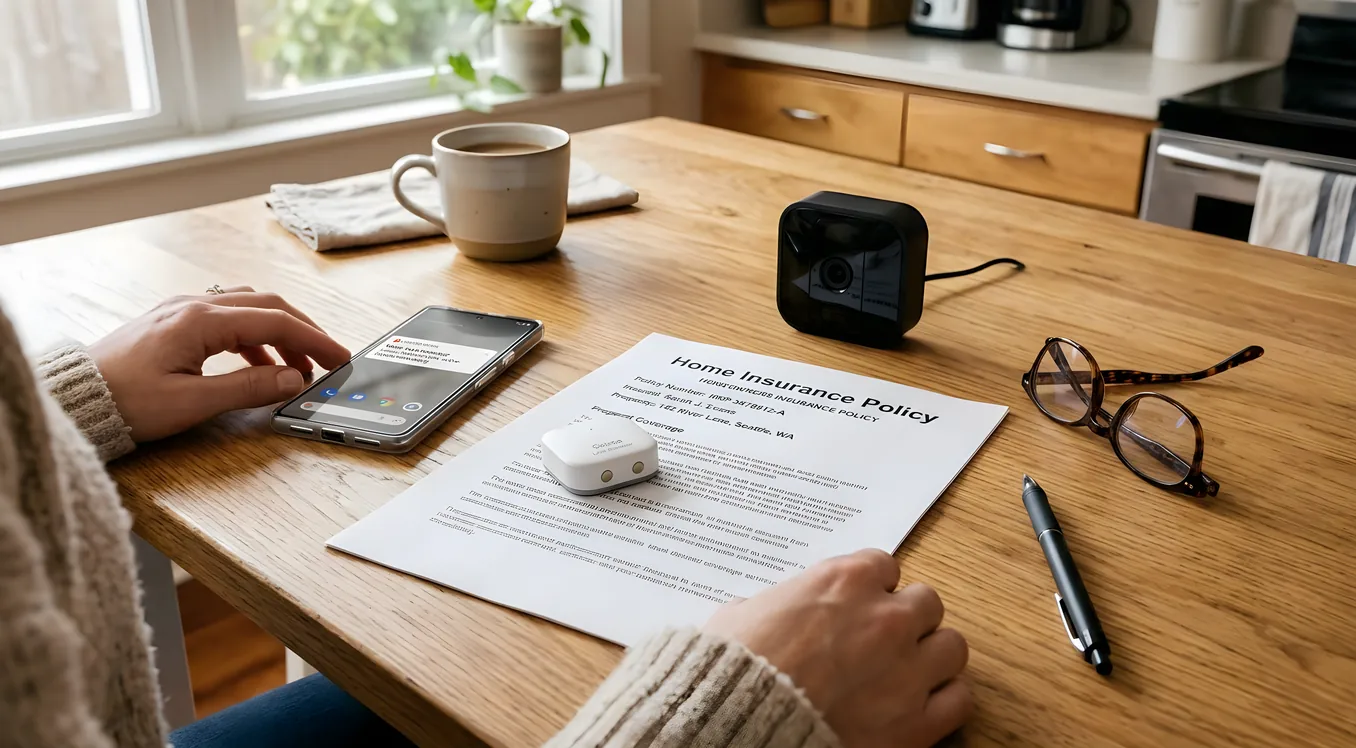
Most homeowners assume that adding a smart security camera or connected smoke detector will automatically knock something off their insurance premium. The reality is more complicated, and more interesting. Some devices do generate meaningful discounts. Others qualify for credits only with specific carriers. A few can actually complicate a claim if they are not set up correctly. And the relationship between smart home technology and insurance is changing fast, with carriers building direct integrations with device platforms that go well beyond a simple discount checkbox.
This is what you actually need to know before buying devices for insurance reasons, renegotiating your premium, or filing a claim where smart home data might be relevant.
How Insurers Think About Smart Home Technology
Homeowners insurance pricing is fundamentally about risk. Carriers want to know the likelihood that your home will experience a covered loss (fire, water damage, theft, liability) and how severe that loss might be if it occurs. Smart home devices affect both numbers.
A professionally monitored security system reduces burglary risk. Connected water sensors catch leaks before they become $40,000 remediation jobs. Smart smoke detectors with faster detection times reduce fire damage severity. These are real, measurable risk reductions, and insurers have been discounting for monitored security systems for decades.
What has changed in the past five years is the granularity. Carriers used to ask a single question: “Do you have a monitored security system?” Now some are asking about specific device types, connectivity, whether monitoring is 24/7, and whether you have both fire and burglar monitoring. A few larger carriers have built API integrations with ADT, Ring, SimpliSafe, and others that let them verify coverage without paperwork.
The discounts themselves vary significantly. A monitored security system might save you 5 to 20 percent depending on your carrier and your state. Water leak detection devices are newer and less standardized, but some carriers offer 3 to 10 percent. Smart smoke and CO detectors typically earn the same credits as hardwired detectors, which are usually small (2 to 5 percent) but stackable with other discounts.
Security Systems: What Actually Qualifies
Not all security hardware earns the same discount, and the distinction usually comes down to monitoring.
Self-monitoring versus professional monitoring. A Ring Video Doorbell Pro 2 that sends alerts to your phone counts as self-monitored. A system that automatically calls a dispatch center when a sensor trips is professionally monitored. Nearly every insurer that offers security discounts requires professional monitoring to unlock the full credit. Self-monitoring may earn a partial discount with some carriers, but you should confirm this before buying.
Certification matters more than brand. Most insurers look for UL-listed equipment monitored by a UL-listed central station. This is a third-party certification from Underwriters Laboratories verifying that the monitoring center meets specific response time and reliability standards. ADT, Brinks, Vivint, SimpliSafe’s paid monitoring tier, and most locally owned alarm companies use UL-listed central stations. The certificate of installation or monitoring agreement paperwork will usually say so.
What to submit to your carrier. When you call your insurer to claim a monitoring discount, they typically want a certificate of alarm (a document from your alarm company confirming the system is active and monitored) or a copy of your monitoring agreement showing the service type. Some carriers accept online verification through their portals; others still want the paper copy mailed or faxed. If your system is integrated with a platform like Control4 or Savant, your integrator can provide documentation of what security sensors and panels are installed.
Smart locks and access control. Smart locks (August, Schlage Encode, Level Lock) rarely earn specific discounts, but they can contribute to a broader security credit if they are part of a certified monitored system. Standalone smart locks with no monitoring usually get no premium reduction.
Water Detection: The Biggest Opportunity Most Homeowners Miss
Water damage is the most common homeowners insurance claim by volume and one of the most expensive by payout. The average water damage claim runs between $10,000 and $15,000, and serious pipe failures or appliance failures can run $50,000 to $100,000 or more before remediation is complete.
This is why carriers are increasingly interested in water detection and automatic shutoff devices. A sensor that catches a slow leak under a dishwasher before it ruins the subfloor is worth thousands of dollars in prevented loss.
Puck-style sensors. Devices like the Moen Flo Smart Water Detector ($49), Govee Water Sensor ($15 to $18), or the D-Link DCH-S161 ($30) sit on the floor near appliances or under sinks and alarm when they detect moisture. These are easy to install, inexpensive, and increasingly recognized by carriers for small premium credits (typically 2 to 5 percent with carriers that acknowledge them).
Whole-home shutoff systems. Devices like the Moen Flo Smart Water Monitor ($500 installed) or the Phyn Plus ($699 plus installation) attach to your main supply line and monitor water usage patterns to detect leaks automatically. They can shut off water to the entire house when an anomalous flow pattern is detected. This is the gold standard for water protection, and some carriers offer their largest water-related discounts only for whole-home shutoff devices. Hippo, Openly, and several regional carriers have specific program tiers for these systems.
Insurance program partnerships. A handful of carriers have formal partnerships with device manufacturers that bundle monitoring with premium discounts. Hippo is the most visible example: they have partnered with various device makers and build device monitoring into their coverage model. Lemonade has experimented with similar integrations. If you are shopping for new homeowners insurance and you have a well-equipped smart home, it is worth specifically asking about carrier programs for connected home devices.
Fire Protection: Smart Detectors and What They Change
Standard hardwired smoke detectors earn a small discount with most carriers because they are more reliable than battery-only units. Smart smoke and CO detectors occupy the same tier, but add remote notification capabilities that can speed up response times.
Nest Protect ($119 per unit) is the most common smart smoke detector and offers two-tier sensing: a “Heads Up” warning at low smoke levels before triggering the full alarm. It also sends mobile alerts when the alarm sounds, which is useful for notifying you when you are not home. Nest Protect units communicate with each other, so an alarm in one room alerts the whole house.
First Alert Onelink Safe and Sound ($129) integrates smoke, CO, and an Amazon Alexa speaker. It connects to the First Alert app for remote alerts.
For insurance purposes, what matters most is that your detectors are interconnected (so all alarms sound when one detects smoke or CO) and that you have coverage in all required locations (typically all bedrooms, outside each sleeping area, and on every level). Smart detectors check these boxes but do not automatically earn larger credits than hardwired detectors with the same interconnect capability.
Where smart detectors can make a real difference is in claim documentation. If your Nest Protect logged an alarm at 11:42 PM on a specific date, that timestamp and event record can be useful during a claim investigation.
The Smart Home Insurance Discount Stack
Multiple small discounts can add up. Here is a realistic picture of what a well-equipped home might save:
A monitored security system covering doors, windows, and motion might earn 10 to 15 percent. Adding smoke and CO monitoring through the same system can push that to 15 to 20 percent in some states. Water leak sensors or a whole-home shutoff device might add another 3 to 8 percent with the right carrier. Some carriers also offer small credits (1 to 3 percent) for smart thermostats like ecobee SmartThermostat Premium ($249) or Nest Learning Thermostat ($279), though this is less common.
On a $2,400 annual premium, a 20 percent total discount saves $480 per year. Over ten years, that more than pays for the devices. The math is most compelling for professionally monitored systems and whole-home water shutoff devices, where the discount is largest and the claim-prevention value is highest.
The key is calling your carrier and asking specifically. Most carriers have multiple discount programs, and the agent you speak with may not know all of them. Ask about: monitored security systems, smoke and CO monitoring, water detection and automatic shutoff, smart thermostats, and “connected home” or “smart home” discount programs by name.
What Integrators Install and Why It Matters for Coverage
If you are working with a professional integrator, the scope of your system likely goes well beyond what a carrier’s standard discount questions anticipate. A professionally installed Control4, Savant, or Crestron system typically includes security integration, environmental sensors, leak detection, HVAC monitoring, and access control in a single unified platform.
For insurance purposes, this creates both opportunity and complexity. The opportunity is that a well-documented professionally installed system is easy to verify and certify. Your integrator can provide a full system specification, including all sensors, monitoring connections, and UL-listed components. This documentation is exactly what carriers need for larger discount programs.
The complexity is that high-end custom systems are not always set up to connect to carrier discount programs, which tend to be designed around consumer devices (Ring, SimpliSafe, Nest). If your security subsystem is managed through a dealer-only platform, you may need to specifically ask your integrator how to document it for insurance purposes.
If you are in the process of planning a system, this is worth raising with your integrator before installation. The Smart Home Cost Breakdown: What Systems Actually Cost in 2026 covers the range of professionally installed systems; at the mid-range and above, the insurance documentation question is worth asking explicitly. Likewise, if you are selecting an integrator, asking about insurance certification documentation is a reasonable item for your vetting list alongside the questions in How to Choose a Smart Home Integrator: Questions, Red Flags, References.
Smart Home Data and Insurance Claims
This is the part of the smart home and insurance relationship that gets very little attention but matters a lot.
When you file a claim, your insurer investigates. For a water damage claim, they will want to understand when the leak started, how long water was present, and what conditions looked like. For a fire claim, they will look at electrical records, alarm activation times, and detection sequences. For a burglary, they want video, access records, and timestamps.
Smart home devices generate exactly this kind of data, and it can cut both ways.
When data helps your claim. A Ring Floodlight Cam footage of a break-in. A Nest Protect timestamp showing a smoke alarm activated before you had time to reset it. A Moen Flo alert log showing the system detected a flow anomaly on Tuesday morning, you received a notification, and the shutoff valve activated before you arrived home. This is documentation that removes ambiguity from a claim and speeds up settlement.
When data complicates your claim. A Lutron lighting log showing lights were on in a room where “no one was home.” A smart thermostat record showing the heat was set below 55 degrees Fahrenheit when a pipe froze. A water sensor that sent three alerts over 48 hours before anyone responded, and the damage continued accruing. Data that implies negligence or contradicts a timeline can be used to reduce or deny a claim.
The practical takeaway is not to avoid smart home devices because of this. The takeaway is to understand that your home is producing records, and those records should be consistent with how you represent events to your insurer. Set your thermostat minimums appropriately when traveling in winter. Respond to leak alerts promptly. Keep your monitoring account active and current.
New Construction and Pre-Wire Considerations
If you are building a new home, the insurance conversation should happen before framing is complete, not after move-in. Several decisions made during construction directly affect your long-term insurance picture.
Hardwired smoke and CO detectors on every level and in every bedroom are required by code in most states, but the specific integration with a central monitoring panel is not always required. Specifying monitored fire and smoke detection during the build, rather than retrofitting it later, costs less and produces a cleaner installation.
Conduit runs for security cameras, structured wiring for a monitored alarm panel, and a whole-home water shutoff valve are all far cheaper to install during construction than after drywall. If you want the maximum insurance discount stack and the best claim-documentation posture, talk to your integrator and your insurer before the Smart Home Pre-Wire: What to Run Before the Drywall Goes Up phase is complete.
Choosing a Carrier That Rewards Smart Homes
Not all insurers treat smart home technology the same way. If maximizing insurance discounts is a real priority, it is worth shopping carriers specifically for their smart home programs.
Carriers with documented smart home discount programs as of 2026 include: State Farm (safe home discount for monitored security and fire), Allstate (home protection devices discount), Nationwide (smart home device discounts, particularly for water protection), Hippo (connected home program built into their core model), and Openly (discount tiers for water shutoff systems).
Regional and specialty carriers vary widely. Some have robust programs; others have no formal recognition of smart home devices beyond a standard monitored security discount. When comparing quotes, ask each carrier specifically: “What discounts do you offer for smart home or connected home devices?” and “Do you have a program for whole-home water shutoff?” The answers will tell you more about how seriously they take this category than their marketing materials will.
What Smart Homes Cannot Do for Your Coverage
A realistic note before closing: smart home devices reduce the probability of certain losses. They do not eliminate them, and they do not change your coverage limits, deductibles, or what events are covered.
A water sensor tells you there is moisture under the sink. It does not prevent the backup sewer line from flooding your basement. A smart lock records who came and went. It does not prevent a break-in by someone who smashes a window. Ring cameras document a theft. They do not recover your property or speed up your insurer’s personal property replacement process.
The insurance benefit of smart home devices is real but proportionate. On a $500,000 home with a $2,000 annual premium and realistic discount stacking, you might save $200 to $400 per year. That is a reasonable return on devices that also provide genuine convenience and peace of mind, but it should not be the primary reason to build a system. If you are exploring smart home investment from a budget perspective, Budget Smart Home: The Best System Under $5,000 covers how to prioritize when you are working with a limited budget.
Making the Most of the Smart Home and Insurance Relationship
The practical steps are straightforward. First, call your current carrier and ask specifically about smart home and connected home discounts before buying any devices. The answer will tell you which categories matter most for your premium. Second, if you already have devices, confirm you have submitted the right documentation (monitoring certificates, device registrations, system documentation from your integrator). Third, when shopping for a new system or a new carrier, treat insurance discount eligibility as one selection criterion alongside features and cost. Fourth, understand that your devices produce records, and manage them consistently.
The homeowners who get the most from the smart home and insurance relationship are not necessarily the ones with the most expensive systems. They are the ones who know what their carrier recognizes, have the documentation to prove it, and have built systems that generate consistent records. That combination produces real savings, real claim protection, and a home that is genuinely lower risk.