Ketra Tunable Lighting: Full-Spectrum Color in Every Room
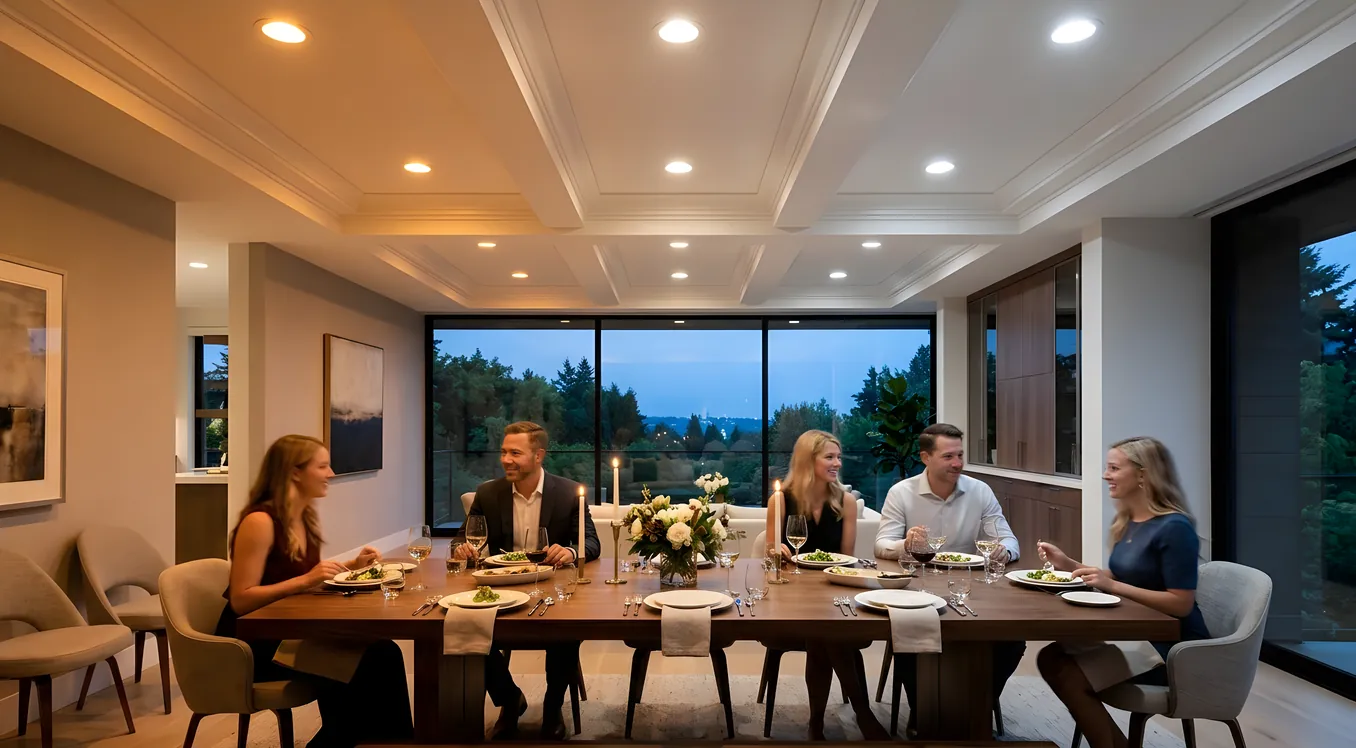
Most smart lighting products promise to change how a room looks. Ketra lighting actually changes how a room feels. That distinction sounds like marketing copy until you stand in a kitchen lit by Ketra at 7 a.m. and notice your body isn’t fighting the light to wake up.
Ketra is a tunable LED lighting system that adjusts both color temperature and intensity continuously, across a range no standard smart dimmer touches. The result is light that tracks natural daylight rhythms, renders colors accurately enough for art collectors and restaurant designers, and integrates deeply with Lutron’s ecosystem. If you’re pricing out a serious smart home build and your integrator has mentioned Ketra, this breakdown explains what you’re actually buying.
What Ketra Is and Where It Came From
Ketra was founded in Austin, Texas in 2009 by a team of lighting engineers who believed that the LED revolution had solved the energy problem but created a quality-of-light problem. Early LED products were efficient but cold, inconsistent, and often rendered colors poorly compared to halogen or incandescent sources. Ketra’s answer was a tunable LED engine that could maintain consistent color quality as it dimmed, something standard LEDs still struggle with.
Lutron Electronics acquired Ketra in 2018, which is the most important context for understanding what the product is today. Lutron is the company that essentially invented residential dimming technology and currently owns a dominant share of the commercial and high-end residential lighting control market. The Ketra acquisition gave Lutron a tunable LED product to pair with its Lutron HomeWorks QSX lighting control system, which is the flagship Lutron platform used in multi-million dollar residential and commercial installations.
That pairing matters because Ketra fixtures are not standalone smart bulbs you drop into a lamp. They’re architectural lighting products: downlights, pendants, linear fixtures, and surface-mount luminaires designed to be installed as part of a planned lighting layout. Your Ketra system talks to Lutron’s ecosystem, which in turn integrates with Control4, Savant, Crestron, and other major home automation platforms.
The Technical Specs That Actually Matter
Ketra’s core selling point is what the company calls Natural Light Intelligence, a set of technologies built into each fixture that distinguish it from other tunable LED products.
Color temperature range: Ketra fixtures tune from 1,400K to 10,000K. To put that in context, a standard warm-white LED bulb runs around 2,700K. A daylight bulb runs around 5,000K to 6,500K. Ketra’s range means it can produce the amber glow of a candle at one end and the cool blue-white light of an overcast sky at the other. For circadian lighting applications, the usable range is typically 2,200K (warm evening light) up through 6,500K (peak midday simulation).
Color Rendering Index: Ketra products maintain a CRI of 98 across the entire dimming range. Standard LEDs typically have CRI ratings between 80 and 90, and many drop further as you dim them. CRI 98 is essentially indistinguishable from natural daylight for color rendering purposes. If you’re specifying lighting for a home with significant art, fine textiles, or a kitchen where food presentation matters, this number is meaningful, not a spec-sheet vanity metric.
Vibrancy mode: Ketra includes a color-accurate rendering mode that saturates and pops colors in a space without tinting the light itself. It’s a way of making a room feel more vibrant at the same color temperature setting.
Dimming range: 0.1% to 100%, with smooth, flicker-free performance across the full range. The low-end 0.1% matters for nighttime hallway lighting and nurseries. Standard dimmers often show visible flicker or drop out before reaching true near-off.
Fixture options: The current Ketra lineup includes N38 retrofit downlights (fits standard 4-inch or 6-inch housings), the N30 series for new construction, linear fixtures for cove and undercabinet applications, and the N11 portable table lamp. The N38 retrofit downlights are the most common entry point for existing-home projects. They pull approximately 13 watts and produce around 800 lumens at peak output, which is comparable to a 60-watt incandescent equivalent.
What Ketra Lighting Actually Costs
Ketra is unambiguously in the premium tier. Here’s what real-world pricing looks like.
Individual fixtures: Ketra N38 retrofit downlights (the most common residential product) run $200 to $350 per fixture at dealer pricing. The N30 new-construction downlights are in a similar range. Linear luminaires for cove lighting applications start around $150 per linear foot.
Whole-room install: A living room with eight downlights, Lutron controls, and programming will typically cost $3,500 to $7,000 installed. That’s fixtures plus control hardware plus integrator labor. A full-home project covering kitchen, living areas, master bedroom, and primary bathrooms, perhaps 30 to 50 fixtures, lands in the $15,000 to $40,000 range installed.
System-level costs: Ketra fixtures operate on a wireless mesh protocol and connect to the Lutron ecosystem through a hub. On a HomeWorks QSX system, the processor that drives your whole-home lighting handles Ketra communication natively. If you’re adding Ketra to an existing Lutron RadioRA 3 system, a Ketra network hub device (the N4, approximately $800) is typically required. This is a different integration path than plugging a hue bridge into your router; plan for integrator involvement.
The honest comparison: A comparable installation using standard dimmable LED downlights with a Lutron RadioRA 3 system might cost 40% to 60% less. The premium for Ketra is real. Whether it’s justified depends on how much you value color quality, circadian rhythm features, and the ability to produce a genuinely different quality of light in the evening versus midday.
Integration: Lutron, Control4, Savant, and Crestron
Ketra’s deepest integration is with Lutron’s own platforms. HomeWorks QSX is the recommended control layer for serious Ketra installations, and the two products are designed to work as a unit. If you’re already specifying HomeWorks QSX for a large project, the incremental cost of adding Ketra fixtures instead of standard LED products is the clearest path. The Lutron HomeWorks QSX overview covers what the base system provides before you layer in Ketra’s tunable capability.
For projects on Control4, Savant, or Crestron, Ketra integrates through two-way drivers that allow the automation platform to address individual fixtures, call scenes, and trigger circadian schedules. Control4 has had native Ketra drivers available since approximately 2020. Savant integrators typically bridge through Lutron’s ecosystem rather than directly addressing Ketra fixtures.
The practical result is that Ketra works well in multi-platform environments, but requires a Lutron layer (either a full HomeWorks QSX system or a Ketra hub) as the intermediary. You’re not going to set up Ketra fixtures as standalone Zigbee or Z-Wave devices controlled directly by your Control4 system. The architecture is: Control4 talks to Lutron, Lutron talks to Ketra. That adds one layer of dependencies, which matters if you’re thinking about system longevity and what happens if Lutron changes the protocol in ten years.
For homeowners evaluating where Ketra fits in the broader Lutron product line, the comparison between entry-level and flagship Lutron products is covered in the Lutron Caseta vs RadioRA 3 breakdown. Ketra is firmly in RadioRA 3 or HomeWorks territory, not Caseta.
Circadian Lighting: The Reason Most Buyers Choose Ketra
The feature that separates Ketra from other smart lighting products isn’t the dimming range or the CRI number. It’s the built-in circadian capability and how it’s implemented.
Ketra’s Natural Light Intelligence system can run a full-day light profile that mirrors the arc of natural daylight. From approximately 6 a.m. to 10 a.m., the system runs warmer, lower-intensity light that gradually brightens and cools toward midday. The peak, around noon, produces cool, bright light in the 5,500K to 6,500K range. Through the afternoon, the light warms and dims. By evening, you’re at 2,200K to 2,700K, a warm amber that matches the color temperature of incandescent bulbs and is associated with melatonin production rather than suppression.
The research behind this approach is solid. Circadian lighting systems and the science behind them goes deeper into how light affects sleep and alertness, but the short version is that blue-spectrum light (high Kelvin temperatures) suppresses melatonin, and most standard LED lighting in the 4,000K to 5,000K range that people install for energy efficiency is doing that in the evening hours when you want to be winding down.
What Ketra does differently from other circadian products is maintain color quality throughout the cycle. Other tunable white LEDs often show color drift as they move between temperatures, particularly visible on white walls and ceilings. Ketra’s calibration prevents that drift, so the transition from afternoon to evening light in your kitchen doesn’t look like someone swapped the bulbs.
The circadian schedule can be set up through the Lutron app or programmed through your integrator as part of the whole-home automation system. On a Control4 or Savant system, the circadian profile can be overridden manually by a user without exiting the mode, and can be tied to other home events: when you arrive home in the evening, when you activate a movie scene, or when the security system arms at night.
Where Ketra Makes the Most Sense
Not every room in a home justifies Ketra’s price point, and no honest integrator will tell you otherwise. Here’s where the product genuinely earns its cost.
Primary living spaces and kitchens: The rooms where you spend the most time during multiple parts of the day benefit most from tunable lighting. A kitchen used for morning coffee, afternoon work, and evening cooking is being asked to do three different jobs. Ketra can deliver all three without scene-switching.
Home offices and workspaces: Sustained task work benefits significantly from cooler, higher-CCI (circadian correlated illumination) light in the morning and midday. Several Ketra clients who work from home report meaningfully better afternoon energy levels. This is hard to quantify, but the correlation between high-CRI cooler light and reduced afternoon fatigue is consistent enough that it’s worth noting.
Art collection spaces: CRI 98 is the specification most lighting designers look for when illuminating artwork. Standard LED downlights at CRI 85 will visibly desaturate the colors in oil paintings and textiles. If you’ve invested significantly in art, the lighting math is straightforward: the cost of Ketra fixtures in a gallery hallway or sitting room is minor relative to what you’re protecting.
Master bedrooms: The transition from day to sleep benefits from intentional light management. Ketra’s dimming to 0.1% and its ability to hold warm, low-intensity light in the 1,800K to 2,200K range in the evening makes it well-suited for bedrooms where you want to wind down without switching off the lights entirely.
Rooms where Ketra may not be the best use of budget: Utility spaces, laundry rooms, garages, and bathrooms with vanity lighting (where you typically want consistent bright light regardless of time of day) don’t benefit meaningfully from tunable capability. Ketra installations in these spaces are possible but rarely cost-justified. Standard LED with Lutron dimming through RadioRA 3 or even smart switches with a solid dimmer handle these spaces well at a fraction of the cost.
Working with a Ketra Integrator
Ketra is not available direct-to-consumer. It’s sold through Lutron-authorized dealers, and because the system requires proper commissioning and calibration, that dealer requirement isn’t a sales channel restriction, it’s a quality control mechanism.
When you’re interviewing integrators for a project that includes Ketra, ask a few specific questions. How many Ketra installations have they completed? Ketra has its own calibration process at commissioning, and integrators who’ve done it once will produce noticeably better results than those doing it for the first time on your home.
Ask about the control interface: will scenes and circadian schedules be accessible through the Lutron app alone, or will Ketra be wrapped into a higher-level system like Control4 or Savant? If you’re investing in a whole-home automation system, you don’t want to open a separate Lutron app every time you want to adjust your kitchen lights; the experience should be unified.
Ask about warranty and serviceability. Ketra fixtures carry a five-year warranty, and replacement fixtures are available through the dealer channel. Unlike consumer smart bulbs where you order a replacement on Amazon, Ketra hardware is dealer-serviced. Know who handles that before you need it.
The Honest Trade-off
Ketra lighting is genuinely excellent at what it does. The CRI performance is consistent, the tunable range is broader than competing products, the dimming is smooth, and the circadian features are implemented thoughtfully rather than as a marketing checkbox.
The cost is real. A Ketra installation is 40% to 80% more expensive than a comparable RadioRA 3 installation with high-quality standard LED fixtures. For a 30-fixture project, that’s a $10,000 to $20,000 premium.
Whether that premium is justified comes down to two things: how much you care about light quality as a daily experience, and whether you’re building a home you plan to live in long enough to amortize the premium. For a 10-year horizon in a primary residence, the cost difference becomes more defensible. For a rental property or a spec home, it’s harder to justify.
The homeowners who consistently feel the investment was worth it are those who spend significant time at home, work from home, or have health-related reasons to take circadian rhythm seriously. The homeowners who occasionally wish they’d spent less tend to be those who primarily use their home as a place to sleep and entertain, not as a primary daytime environment.
Getting the Most from a Ketra System
A few practical notes for homeowners who do move forward.
Commission the system properly. Ketra fixtures include self-calibration hardware, but the initial setup should be done by your integrator with the actual room conditions in place, including windows, wall colors, and furniture, because all of those affect how the light renders in the space.
Build scenes beyond the circadian profile. The circadian auto-mode is useful, but the scenes you program for specific activities (cooking, entertaining, movie watching, early morning) are often more valuable day-to-day. Your integrator should spend meaningful time on this during commissioning.
Integrate with your shading. If you have motorized shades or blinds, tying them to the Ketra system significantly amplifies the effect. When shades rise in the morning as the lights warm up, the combined effect of transitioning natural light and tunable artificial light is considerably more convincing than either alone. The motorized shades integration guide covers how those systems connect to Lutron and Control4 in more detail.
Plan for future expansion. Ketra’s wireless mesh architecture allows adding fixtures to an existing system without rewiring. If you start with the kitchen and primary living spaces, adding Ketra to the master bedroom two years later is a manageable project rather than a whole-home rewire.
The Lighting Investment That Outlasts the Tech Cycle
Smart lighting products come and go. Bulb ecosystems get discontinued, apps stop receiving updates, and the hub that tied everything together eventually loses its cloud service. Ketra’s position within Lutron’s product line provides more stability than most: Lutron has been in business since 1961, controls an estimated 50% of the commercial dimming market, and has never discontinued a major residential product line without providing a migration path.
For homeowners who’ve watched consumer smart home products come and go, that track record matters. You’re not betting on a startup or a consumer electronics company’s attention span. You’re buying into a company that has decades of experience supporting installed lighting systems in buildings that outlast the original owners.
The combination of color quality, circadian intelligence, system integration depth, and long-term vendor stability makes Ketra the most defensible premium lighting investment in the residential market today.