Smart Package Delivery Solutions: Lockboxes, Cameras, and Notifications
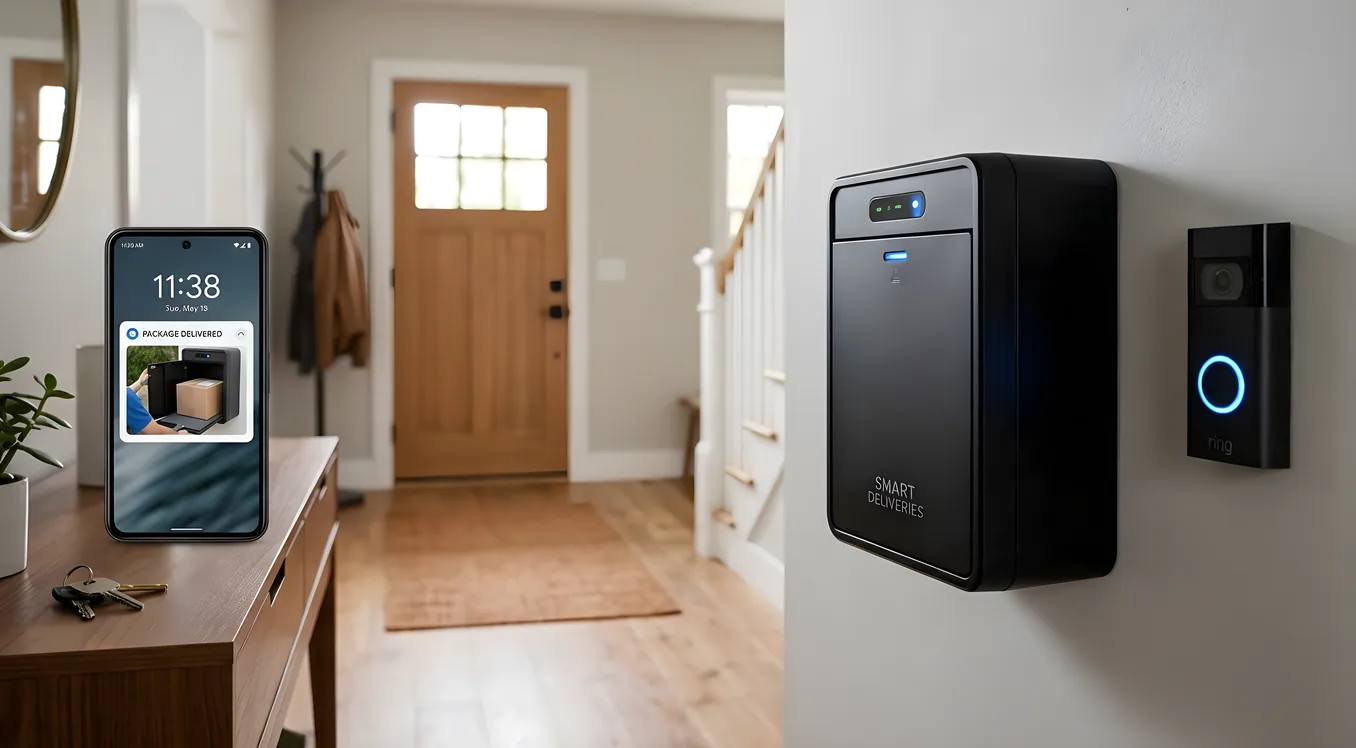
Package theft is not a fringe problem. According to data compiled by SafeWise, roughly 260 million packages were stolen in the United States in 2023. That number keeps climbing as e-commerce volume grows. If you have had a package stolen from your porch, or you have arrived home to find a redelivery notice for something that required a signature, you already know the frustration. The good news is that smart home technology has produced a practical toolkit for solving this, and the best approach for your home depends on your delivery volume, your property layout, and how much friction you are willing to add to the delivery process.
This is not a quick product roundup. It is a breakdown of the actual strategies, the hardware that executes them well, what each costs, and where each one fails. By the end you should know exactly which combination makes sense for your situation.
Why the Standard Approaches Fall Short
A simple camera pointed at your front door solves part of the problem. You get footage of the theft. You might be able to identify the person. You can file a police report and potentially make an insurance claim. But you still do not have your package. Prevention and evidence are not the same thing, and most homeowners set up video monitoring and discover this distinction the hard way.
Ring and Nest Hello doorbells (now called Google Nest Doorbell) are effective at deterrence in some contexts. A visible camera does reduce opportunistic theft, particularly in lower-crime areas where a would-be thief is looking for the easiest targets. But dedicated porch pirates are not deterred by cameras. They know the coverage timeline: they pull up, grab the box, and are gone in under 20 seconds. The footage is clear and the package is still gone.
The more complete strategy combines three elements: a secure delivery receptacle that protects packages from the moment they arrive, video monitoring that documents delivery and any tampering attempts, and real-time notifications that let you act quickly if something goes wrong. Each layer has its own requirements.
Smart Lockboxes: The Core Protection Layer
A smart package lockbox is a reinforced container that delivery drivers can open with a single-use code or an unlock signal, then drop a package inside. The door locks automatically when it closes. You open it with your own code, fingerprint, or app. A thief cannot access the contents without either the owner’s credentials or significant effort to destroy the box, which eliminates the casual grab-and-go.
Package Guard Original
The Package Guard Original ($99) takes a different angle: it is a pressure-sensitive mat that detects when packages are placed on it and sends a smartphone alert. It does not physically secure anything. The mat pairs with a connected module that alerts you within seconds of a delivery, which gives you time to either come home or ask a neighbor to bring packages inside. This is a reasonable entry point if you live in a lower-theft area and just want real-time delivery awareness without installing a box.
Cleveron KeyBox Series
For actual physical security, the Cleveron KeyBox 4 ($349) is a welded steel cabinet with a 17-gallon interior, rated for packages up to 23 x 16 x 12 inches. It mounts to your porch or entryway with lag bolts into concrete or wood and has anti-pry reinforcement around the door. Delivery drivers open it via a 4-digit code you set (which you can share with carriers through delivery instructions), and the door auto-locks on closure. You get in with your own code or via the companion app. A built-in tamper alarm goes off if someone tries to force the door, and the app logs every open/close event with timestamps.
The Cleveron KeyBox ships as a fixed-code model or a rolling-code version at $449. The rolling code changes the entry PIN after every delivery, which eliminates the risk that a driver who learned your code could return later. For households with high delivery volume and consistent carrier access, the rolling code version is worth the extra $100.
Amazon Hub Locker and Key
If the majority of your deliveries come through Amazon, their ecosystem offers two built-in solutions. Amazon Hub Lockers are free-to-use pickup locations at retail partners, but they require you to redirect shipments to a locker address rather than your home, which is a significant inconvenience for any order that requires staying home to receive.
Amazon Key for Garage is more practical for homeowners with an attached garage. It uses a compatible garage door opener (the Chamberlain myQ is the primary supported hardware, at $30 to $50 for the smart controller), and Amazon-approved drivers can open your garage, deposit the package inside, and close it. You receive a notification and an in-app video of the delivery via the Amazon Key camera ($249 for the indoor model). The concept works well for Amazon packages specifically, but it does not help with FedEx, UPS, or USPS deliveries, and it requires trusting an Amazon driver with physical access to your garage interior.
Danby Package Guard Pro
The Danby Package Guard Pro ($199) is a weather-resistant polypropylene box rated for outdoor year-round use in most climates. At 14.6 x 15 x 19.5 inches of usable interior space, it handles most standard shipments but will not accommodate oversized boxes. The RFID-based locking mechanism means delivery drivers tap an included fob against the sensor to open; the door ratchets closed and locks. The fob can be left in a visible location (attached to the box exterior) for driver access, or you can provide the delivery code via your order’s delivery instructions. Danby recommends securing the box to a surface with the included concrete anchor hardware.
At $199, the Danby is significantly less expensive than the Cleveron options and handles the majority of small-to-medium delivery scenarios. The polypropylene construction does not feel as robust as welded steel, but it resists weather well and is difficult to break into quickly.
Video Monitoring: Choosing the Right Camera Position
A lockbox solves theft of secured deliveries. A camera solves documentation of everything that happens before, during, and after that. The combination gives you both prevention and evidence, and the camera serves additional security functions beyond package monitoring. Home security cameras for porch and entryway use vary considerably in image quality, storage approach, and integration options.
Ring Video Doorbell 4 and Ring Floodlight Cam
The Ring Video Doorbell 4 ($220) is the current mid-tier model in Ring’s lineup and the one that makes sense for most package delivery setups. It records in 1080p HDR, has a 160-degree horizontal field of view, and offers Color Night Vision that produces usable color footage down to roughly 5 lux. The pre-roll feature captures four seconds of black-and-white footage before motion triggers a recording, which means you see what happened before the person entered the frame.
For package delivery specifically, the motion zones and Bird’s Eye View (overhead map-based motion tracking) let you set alerts specifically for your front walkway and porch area without being triggered by every car that passes. Ring Protect subscription at $4.99 per month or $49.99 per year stores 180 days of event history. Without a subscription, you still get live view and motion alerts, but no recorded history.
The Ring Floodlight Cam Wired Pro ($250) adds 1080p HDR video to a dual 2,000-lumen floodlight assembly. If your porch area is not well lit at night, the floodlight integration is significantly better than a separate camera plus separate lights. The motion-activated lights act as a deterrent and eliminate the common problem of poor night footage even with Night Vision enabled.
For full context on how Ring compares to Google Nest Doorbell and professionally installed options, video doorbells compared across the major brands covers image quality, storage models, and smart home integration in detail.
Google Nest Cam (Battery) and Nest Doorbell
Google’s Nest Cam Battery ($180) is a good alternative if you are invested in Google’s ecosystem or prefer not to install Ring hardware. The battery-powered version is straightforward to position anywhere without running wire, though the battery lasts roughly 1 to 3 months depending on activity level and requires recharging via USB-C. The Nest Doorbell (Battery, $180) is roughly equivalent to the Ring Doorbell 4 in image quality and adds face recognition through Nest Aware, which can notify you specifically when an unfamiliar face appears at the door, as distinct from a recognized family member.
Nest Aware at $8 per month or $80 per year includes 30 days of event history and 10 days of 24/7 continuous recording. The face recognition feature requires Nest Aware Plus at $15 per month or $150 per year.
AI Cameras for Package-Specific Detection
Standard motion-triggered cameras generate a lot of false alerts from wind, shadows, passing cars, and animals. AI-based package detection is a more targeted feature that specifically identifies when a package is placed at your door, or picked up from your door, and alerts you accordingly. Arlo Pro 5S ($200) includes on-device AI processing that can detect packages and send package-specific push notifications without requiring a subscription. The 2K HDR resolution with color night vision and an integrated spotlight produces usable color footage in very low light.
The Eufy Security Dual-Lens Video Doorbell ($200) takes a different approach: it uses two lenses simultaneously, one at eye level and one pointed downward at the delivery area, so it captures both face identification and a close-up view of packages placed on the porch. The dual-lens design addresses a common problem with standard doorbells where the face is in frame but the package detail is not.
Smart Notifications: Closing the Response Window
The third layer of smart package delivery is real-time awareness. A package lockbox protects the delivery. A camera documents it. Notifications let you act fast if something goes wrong between when a package arrives unsecured and when you can bring it inside.
Carrier tracking notifications are available from every major carrier but are notably inconsistent in timing. “Out for delivery” notifications from USPS, FedEx, and UPS often arrive 30 to 90 minutes after actual delivery. That window is enough time for a theft to occur.
Delivery Tracking Apps
Route ($0, available for iOS and Android) aggregates tracking from every carrier by scanning your email for order confirmations and pulling tracking numbers automatically. When a package arrives, you get a notification from Route directly, typically within a few minutes of carrier scan. The app also handles package claims directly with retailers if something goes wrong. Parcel ($4.99 one-time on iOS) is a similar aggregator with a cleaner interface and watchlist features for monitoring specific shipments.
IFTTT and Home Automation Integration
If your home runs on a platform like Control4, Crestron, or Savant, package delivery notifications can trigger home automation scenes. A common configuration: when the front door camera detects motion and identifies a package placement, the system sends a push notification, briefly activates porch lights if it is after dark, and logs the event to a timeline visible in the home interface. Control4 and Crestron both support webhook-based integrations that can pull delivery data from carrier APIs into the home automation scene logic.
For homes running simpler smart home platforms, Ring’s Alexa integration allows delivery announcements through Echo speakers. “A package has been delivered to the front door” plays through any connected Echo device when Ring detects a delivery. Google Home has equivalent functionality with Nest cameras. Neither is as configurable as a full Control4 or Crestron installation, but both work reliably for basic delivery awareness.
Smart Lock Integration for Garage Access
One underused option for households with attached garages is integrating package delivery access into your smart lock and access control setup. A temporary access code provided to delivery services via services like LockState or August’s in-app feature lets drivers access a mudroom, enclosed porch, or garage for delivery without giving permanent access. August Smart Lock Pro ($230) supports time-limited guest access codes that expire after a single use or after a set time window. You receive an access log notification every time the code is used.
The combination of a smart garage door opener (myQ or equivalent) plus a camera inside the garage and a time-limited access code for Amazon Key deliveries is, for many suburban homes, the most secure end-to-end solution available without a dedicated lockbox. It handles oversized packages that would not fit in any standard lockbox, and the interior camera footage is clean without weather or glare issues.
For homes with automatic gates or driveway access control, a delivery-specific entry credential that works only during certain hours is a reasonable layer to add. Residential access control for gates and garages covers the credential management and integration options in more detail.
Putting It Together: Scenarios That Actually Work
The right combination depends on your delivery volume and property setup.
High-volume delivery, urban or suburban home: Cleveron KeyBox 4 mounted near the front door, a Ring Floodlight Cam Wired Pro covering the porch and walkway, and Route app for aggregated carrier tracking. Total hardware cost around $600 to $650. Monthly cost: $50/year for Ring Protect. This covers package security, documentation, and real-time alerts for any carrier.
Moderate delivery volume, attached garage: Chamberlain myQ controller ($40) paired with Amazon Key for Amazon deliveries, plus a Nest Cam Battery positioned at the porch for non-Amazon deliveries, plus a Danby Package Guard Pro lockbox for USPS and UPS packages. Total hardware around $420. This setup handles the majority of delivery scenarios without requiring changes to how you order.
Low delivery volume, primary concern is awareness: Package Guard Original mat ($99) plus a doorbell camera like the Google Nest Doorbell ($180). No physical lockbox. Alerts arrive within seconds of delivery and the camera documents anything that happens. This is an appropriate setup for homes in lower-theft areas where the risk is manageable and the primary need is just to know when something has arrived.
Whole-home integration: If you have a Control4 or Crestron system, bring the camera feeds and delivery tracking webhooks into the system so that delivery events appear in your home dashboard alongside your other security zones. The smart alarm and monitoring ecosystem can include package delivery as a monitored zone category, with events logged alongside door/window sensors and motion detectors. This level of integration requires a professional installer but produces a unified view of everything happening at your property.
What Professional Installation Adds
DIY smart package delivery setups work. Ring and Nest cameras are genuinely straightforward to install and configure. A lockbox installation takes about 30 minutes with a hammer drill and the included hardware. Most homeowners can put together a functional system in an afternoon.
Where professional installation adds value is integration and reliability. A certified installer connecting your camera system into a Control4 or Crestron ecosystem can build logic that a standalone app cannot: delivery events that trigger recording on all exterior cameras, cross-reference with alarm zones, send notifications through a single interface, and generate reports over time showing delivery patterns and any anomalies.
Professional installers also handle the wiring for permanent cameras in a way that DIY setups often shortcut. A battery-powered Nest Cam is convenient but requires charging every one to three months. A wired camera with local video storage has no charging requirement, no cloud subscription dependency, and no single point of failure if your internet connection goes down. For a permanent porch or garage setup, hardwired with local storage is the better long-term configuration even if it costs more upfront.
The Numbers That Matter
To size this up: package theft costs the average affected household around $50 to $200 per incident when accounting for replacement cost, insurance deductibles, and time spent filing claims. A solid smart package delivery setup costs $300 to $700 in hardware with $50 to $150 per year in subscription costs. If you have more than two or three thefts per year, the math on prevention is clear. If you have never had a theft but receive 20 or more packages per month, the volume itself justifies the investment because the statistical exposure is significant.
Building a Reliable Package Delivery System
The sequence that works: start with a lockbox that matches your typical package sizes, add a camera that covers the full delivery approach path rather than just the door, set up aggregated carrier notifications so you know within minutes when something arrives, and then layer in automation integrations if your home platform supports them.
The single biggest mistake in this category is treating a camera as a complete solution. Footage is evidence, not prevention. A porch pirate caught on camera is still a porch pirate with your package. Physical security at the delivery point, combined with fast notification so you can act on unsecured deliveries, is what actually reduces losses. The camera earns its place in the stack by documenting what the lockbox cannot prevent and by serving your broader home security goals beyond packages alone.