Smart Fence and Gate Systems: Automated Perimeter Security
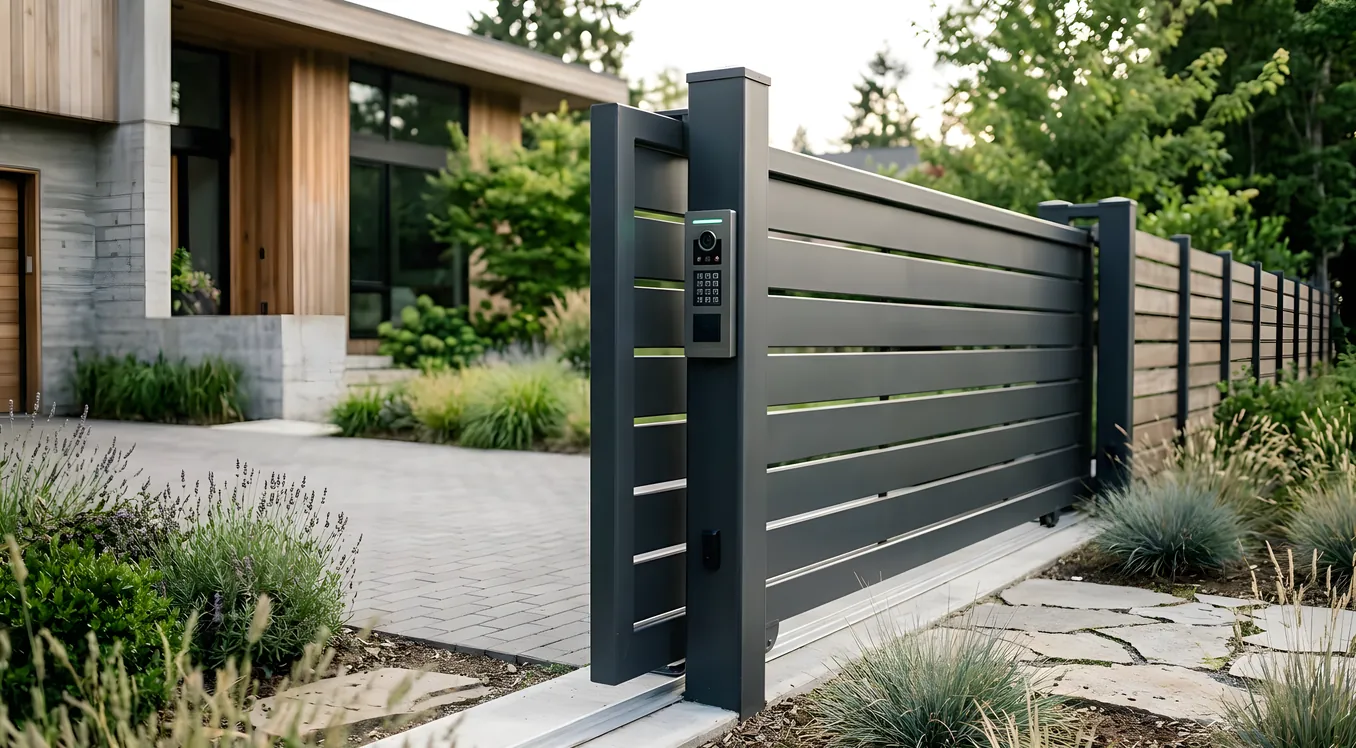
Your gate is probably the weakest point in your home security setup. A keypad combination written on a sticky note, a remote fob anyone can press from the street, or a swing gate that someone simply pushes open from the outside are not perimeter security. They are the appearance of perimeter security. Smart gate automation changes that calculus: automated entry tied to real access credentials, remote control, audit logs, and integration with the rest of your security stack.
This article covers what homeowners actually need to know before buying: gate operator categories, motor sizing, access control options, integration with broader smart home platforms, costs at different quality tiers, and where the DIY path stops making sense. If you have already done some research and arrived here confused by conflicting recommendations, that is normal. The gate automation market is split between consumer-grade products designed for easy installation and commercial-grade equipment designed to last twenty years in high-traffic applications. The right answer depends heavily on which category your use case falls into.
Gate Type Determines Everything
Before you choose a motor or an access system, the gate itself determines what is even possible. There are two main residential categories.
Swing gates rotate on hinges. They can swing inward (more common in residential, requires clearance behind the gate) or outward (useful on sloped driveways). A single swing gate works on properties with one vehicle entry point. Dual swing gates are common on wider driveways. Most residential swing gate operators use articulating arm mechanisms, with the motor mounted on a post or column and the arm attached to the gate leaf. The LiftMaster LA500PKGU is the most commonly specified residential swing gate operator in this category: it handles gates up to 16 feet and 500 pounds per leaf, runs on 120V AC with built-in battery backup, and is compatible with myQ (LiftMaster’s smart platform) for remote access and monitoring.
Sliding gates roll laterally on a track. They require space alongside the fence line for the gate to open into, but they perform better on sloped driveways where a swing gate would drag or bind. Sliding gates are also generally considered more secure because they are harder to force open: there is no hinge point to attack. The LiftMaster SL595101UL is a widely used residential-to-light-commercial sliding operator rated for gates up to 40 feet and 1,500 pounds. It uses a UL 325 compliant control board, supports dual-gate configurations, and integrates with myQ for smartphone control. The SL595 series costs more upfront than swing operators (typically $800 to $1,200 for the operator unit alone), but the reduced mechanical complexity of a sliding system means fewer service calls over a ten-year window.
There are also vertical pivot gates and cantilever sliding gates used in specific situations (shallow property lines, unstable soil), but these are uncommon in residential settings and usually require a professional design assessment.
Motor Sizing and Duty Cycle: Where Buyers Go Wrong
The most common mistake in gate operator selection is undersizing the motor for actual use patterns. Residential operators are rated by duty cycle: the percentage of time they can run continuously without overheating. A light-duty operator at 30 percent duty cycle is fine for a gate that opens and closes a few times per day. In a household with multiple drivers, deliveries, dog walkers, and service vehicles, the same gate might cycle 20 to 30 times per day. That is when undersized motors fail, usually at the worst possible time.
For a household with fewer than 15 gate cycles per day, a standard residential operator works fine. Above that, look at operators rated for medium-duty or commercial applications. The FAAC 400 and FAAC 402 series are Italian-manufactured swing gate operators used in both high-end residential and light commercial installations. They are rated for continuous duty in commercial settings, handle gates up to 880 pounds per leaf, and the FAAC ecosystem supports integration with access control systems from Axis Communications and other commercial-grade providers. Pricing for a FAAC 400 series operator runs $600 to $900 per leaf for the operator alone, plus installation.
Gate weight also matters more than most people expect. Measure your gate before specifying an operator. A wrought iron dual swing gate at 14 feet wide can easily exceed 600 pounds. Many homeowners do not know the weight of their gate until the install day when the operator struggles or the installer comes back with a different unit.
Access Control: Beyond the Remote Fob
Remote fobs and keypads get the job done for simple residential use. But smart gate automation is not really about the motor; it is about controlling who has access and knowing who has used it. That is where the access control layer comes in.
Keypad entry is the baseline. A weatherproof keypad like the LiftMaster 877MAX or the Linear AK-11 supports multiple user codes, allows temporary codes for contractors and guests, and records entry events. The LiftMaster myQ system links the keypad to a smartphone app so you get a push notification every time a code is entered and can add or revoke codes remotely. This costs $80 to $150 for the keypad hardware and a $5/month myQ subscription for remote management.
Vehicle detection is an underappreciated upgrade. A loop detector buried in the driveway or a magnetic vehicle sensor mounted above the driveway identifies vehicles waiting at the gate and can trigger automatic open for authorized vehicles. Some installations pair loop detectors with vehicle recognition cameras that read license plates and cross-reference against a whitelist. The Linear DKS 6001 is a residential-grade license plate recognition camera system that integrates with most gate operators via a dry-contact relay. It costs around $400 to $700 for the camera and reader unit. At the higher end, Avigilon (a Motorola Solutions brand) and Axis Communications make LPR camera systems used in gated communities and multi-tenant residential properties that can handle hundreds of authorized plates with audit logging and active directory integration.
Intercom systems turn the gate entry point into a two-way video conversation from anywhere. The DKS DoorKing 1837-080 is a video intercom specifically designed for gate applications: it mounts at the gate column, connects via IP over CAT-5, and supports mobile app answering from any smartphone. A visitor presses the call button, you answer on your phone and can see the live video feed, then unlock the gate remotely with a tap. Installation cost for a gate intercom like the DoorKing 1837 runs $800 to $1,500 installed, depending on how much wire needs to be run to your gate column.
If you are building out a broader entry control system that includes your garage, front door, and gate together, the Residential Access Control: Gate, Garage, and Entry Systems overview covers how these pieces fit into a unified credential system rather than three separate apps.
Integration with Smart Home Platforms
Smart gate automation earns its name when it works alongside the rest of your smart home rather than as a standalone silo. What that integration looks like depends on what platform you have.
Control4 is the most common professional-grade platform for residential integration. The Control4 driver ecosystem includes native drivers for LiftMaster myQ, FAAC, DKS DoorKing, and most other major gate operators. With a Control4 driver installed, your gate appears in the Control4 interface alongside your lights, thermostats, and cameras. You can create scenes: arrive home and the gate opens automatically as your car approaches (triggered by geofencing), the garage door opens thirty seconds later, and the exterior lights come on at dusk. The gate also appears in the Control4 security panel view so a single screen shows all entry points. Control4 integration requires a licensed dealer and adds $200 to $500 to the driver/programming cost on top of the hardware.
Savant handles gate integration similarly through its Pro ecosystem. Savant’s strength is in the mobile experience: the Savant app is widely regarded as having the best consumer interface of the professional platforms, and gate controls are surfaced cleanly alongside other security functions. Savant systems typically start at $10,000 to $15,000 for full home integration and are positioned above Control4 in price.
Crestron is used primarily in luxury residential and commercial installations. Crestron gate integration uses a combination of IP drivers and relay interfaces for operators that do not have native IP connectivity. The integration cost is higher than Control4 because Crestron programming is billed at $125 to $250 per hour and even straightforward gate integrations require several hours of programming. Crestron is the right choice for estates with commercial-grade security requirements, not for a typical residential driveway gate project.
SmartThings and Home Assistant are the DIY-friendly options. SmartThings has a functional myQ integration that gives you remote open/close and status monitoring without a subscription. Home Assistant has a richer integration that supports automations, geofencing triggers, and notification logic. The catch: neither integrates as cleanly with intercom or access control systems as professional platforms do, and you will build your gate automation piecemeal rather than as a designed system.
For homeowners comparing the broader professional platforms, the Control4 vs Savant vs Crestron decision usually comes down to dealer availability in your market and what the rest of your home is running on. Adding a gate integration to an existing platform you already have is almost always easier than introducing a second platform to handle just the gate.
Perimeter Security Beyond the Gate
The gate is the opening in your perimeter. The fence and the areas surrounding the gate also need coverage for the system to be meaningful.
Fence-mounted sensors detect climbing, cutting, or vibration. Gallagher and Takex both make perimeter intrusion detection systems that attach to chain-link or iron fence and signal an alarm on contact. These are common in commercial applications but increasingly available for residential use. The Takex FD-3P outdoor fence detector covers up to 165 feet of fence line, mounts on standard posts, and connects to most security panels via wired or wireless relay.
Camera coverage at the gate is not optional if you care about who is actually entering. A gate intercom camera gives you a front-facing view of the person at the call button, but it does not give you a vehicle view, a wide approach view, or coverage of adjacent fence sections. Pairing the gate with two or three cameras, one covering the approach lane, one covering the gate area wide, and one pointed down the fence line, gives you a complete picture. The Home Security Cameras: Local vs Cloud, Wired vs Wireless article covers what to look for in weatherproof outdoor cameras and when locally-stored footage matters more than cloud-dependent solutions.
Motion lighting at the gate column makes a significant difference in the usability and security of nighttime access. A 1500-lumen fixture with a 10-meter PIR sensor mounted at 8 feet above the gate keypad eliminates the frustration of trying to enter a code in the dark and removes the low-light issue that makes camera footage useless. Lutron’s Maestro sensor switches can control exterior gate lighting if the gate column has a power circuit run to it, which most installations do for the operator.
Tying the Gate into a Full Security Stack
The gate works best as part of a layered security approach rather than as your primary or only defense. A typical layered approach for a residential property looks like this: perimeter (fence, gate, sensors), approach zone (cameras with motion alerts), entry point (video intercom, access credential required), interior (smart alarm, interior cameras), and monitoring (either professional monitoring or self-monitored with a system that sends notifications).
For the alarm layer, the Smart Alarm Systems: Monitored vs Self-Monitored vs Hybrid breakdown covers the tradeoffs between DIY monitoring (lower cost, requires your attention) and professional monitoring (faster police response, works even if you miss the notification). Gate breach sensors can tie directly into most alarm panels, so a forced gate entry immediately triggers your alarm sequence rather than just a camera alert.
The Video Doorbells Compared: Ring, Nest, and Professional Options article is worth reading if you are also addressing your front door entry point. The integration story between Ring video doorbells and Ring Alarm is straightforward, but it does not extend to gate operators the same way a Control4 system does. If your front door is handled by a Ring ecosystem and your gate is handled by LiftMaster myQ, you will have two apps to manage rather than one unified interface.
For most homeowners doing a phased approach, starting with gate automation and adding access control and cameras later is a reasonable path. Just make sure the gate operator you choose supports the access control and integration options you want to add later. Switching operators because your chosen unit does not have an API or dry-contact integration for a third-party keypad is an expensive lesson.
What Smart Gate Automation Actually Costs
Budget ranges vary widely based on gate type, site conditions, and feature level.
Entry level residential: Basic swing or slide operator (LiftMaster, Chamberlain, or Mighty Mule), a keypad, and myQ connectivity for remote monitoring. Total installed cost including operator, keypad, permit if required, and basic wiring runs $1,200 to $2,500 for a single gate. This assumes the gate structure exists and is in good condition. If the gate posts need to be reinforced or replaced, add $500 to $2,000 for that work.
Mid-range with access control: A higher-duty-cycle operator (LiftMaster SL595, FAAC 400 series), a 2-wire intercom or video intercom at the gate column, and a managed keypad with user codes and audit logging. Installed cost $3,500 to $7,000, depending on how much wire needs to be run and whether electrical service needs to be extended to the gate column.
High-end integrated installation: Commercial-grade operator, video intercom with IP connectivity, license plate recognition camera, integration with a Control4 or Savant platform, perimeter sensors along adjacent fence sections. Installed cost $8,000 to $20,000 and up, depending heavily on property size and what the integration labor involves. For a property with an existing Control4 system, adding the gate as an integrated control point is relatively efficient. For a new installation that needs both the platform and the gate, costs scale with the overall system scope.
Ongoing costs: LiftMaster myQ remote monitoring costs $5/month or $30/year without a security system subscription. DoorKing intercom systems typically have no subscription for the core function but may charge for cloud-hosted phone book management on multi-unit installations. Control4 platform updates and driver maintenance are typically bundled into annual service agreements with your integrator, which run $300 to $1,500/year depending on system complexity.
When to Call an Integrator
The DIY threshold for gate automation is lower than for many smart home categories. A competent homeowner can install a basic LiftMaster swing gate operator, run the wiring to a keypad, and configure myQ without professional help. The electrical and mechanical work involved is not significantly harder than a garage door opener installation, which most handy homeowners can handle.
The line crosses when:
- The gate is heavier than 400 pounds per leaf (weight calculation should be confirmed, not guessed)
- You want video intercom with IP connectivity
- The gate needs to integrate with a Control4, Savant, or Crestron system already in the home
- Local permits are required (many jurisdictions require permits and inspections for motorized gate installations, especially if the operator is on a commercial property or adjacent to a public sidewalk)
- Your driveway is sloped enough that a swing gate will drag or that a sliding gate track requires site grading
For anything beyond a basic operator-and-keypad install, working with a gate automation specialist or a full-service AV and security integrator who understands both the mechanical side and the control system side is worth the cost. Integrators who work with Control4 or Crestron daily have already solved the integration problems you would otherwise spend hours troubleshooting.
Making the Gate Part of a Smarter Front Entry
Smart gate automation is not a security silver bullet, but it is the right foundation for properties where the perimeter matters. A motorized gate with proper access control, camera coverage, and integration into your home’s security platform gives you something that a keyed lock cannot: a log of every entry, the ability to grant and revoke access remotely without issuing a new key, and the option to monitor your perimeter from anywhere.
The path to getting there starts with understanding your gate type, specifying the right operator for your actual cycle count, choosing an access control method that matches your credential requirements, and selecting a connectivity approach that will work with what you plan to add later. Get those decisions right upfront and the smart perimeter you build will be one you do not have to replace in three years.
For homeowners also upgrading door locks as part of this project, the Smart Locks: Keyless Entry Systems for Modern Homes overview covers credential management, integration with access control platforms, and which lock brands hold up over time in exterior conditions.