Smart Water Leak Detection: Sensors, Shutoff Valves, and Insurance
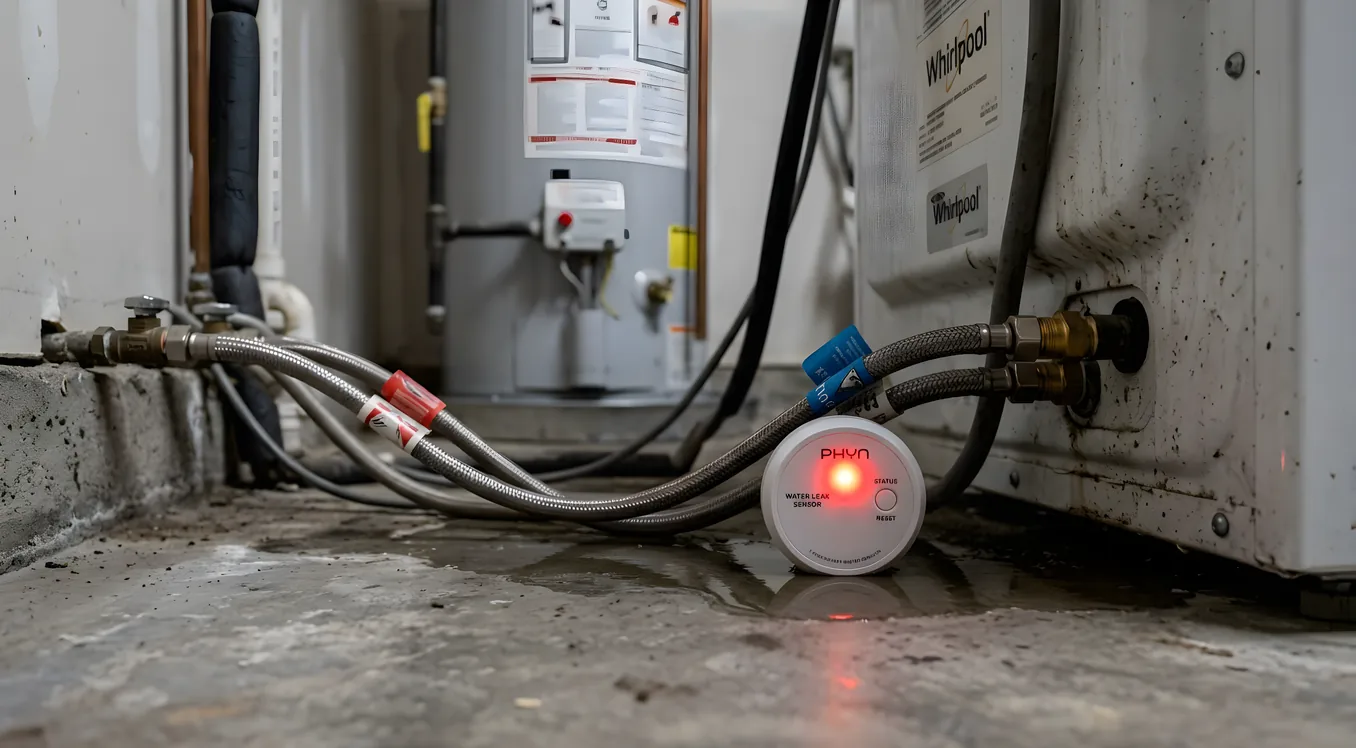
Water damage is the most common and most expensive home insurance claim in the United States. The average payout runs between $11,000 and $15,000, and that figure understates the real cost because it excludes temporary housing, lost possessions, and the months of disruption a major leak causes. Insurance companies know this. It is why many carriers now offer meaningful discounts for homes with whole-house leak detection, and why a smart water leak detector has become one of the highest-return smart home investments a homeowner can make.
This is not a problem that announces itself. Pipes fail behind drywall. Water heaters corrode at the base for months before the tank lets go. Dishwasher supply lines develop pinhole leaks that run quietly under the cabinet. By the time you notice the problem, the subfloor is rotted, mold is established, and the claim process is already under way. Detection solves this by moving the moment of discovery from “visible damage” to “first moisture.”
This guide covers how smart leak detection actually works, which sensor systems and shutoff valves make sense for different homes, what professional-grade systems from integrators add beyond DIY products, and how to document your installation for maximum insurance benefit.
How Smart Water Leak Detectors Work
Every smart water leak detector is built around one of two detection principles: electrical conductivity or flow monitoring. Understanding the difference shapes every buying decision.
Conductivity sensors are small pucks or strips that sit on the floor or rest near a water source. When water bridges the gap between two metal contacts on the sensor, the circuit closes, current flows, and an alert fires. These are the $20 to $50 devices you place under a sink, near a water heater, or beside a washing machine. They work well for point-of-failure detection. The weakness is that they only know what they can touch. A leak on one side of a wall, a slow drip running into a cavity before pooling, or moisture building up inside cabinetry can go undetected until the water reaches the sensor’s location.
Flow monitoring systems attach to the main water supply line and measure water movement through the pipe. They look for patterns that suggest a leak: continuous low-level flow when all fixtures should be off, flow volume that exceeds what the household typically uses, or sudden high-velocity discharge. Some systems, like Flo by Moen, also run a daily pressure test of the entire plumbing system by briefly closing the shutoff valve and watching whether pressure holds. This catches slow leaks anywhere in the system, not just where you placed a sensor.
Most well-protected homes use both approaches together. Flow monitoring at the main line catches the majority of events. Point sensors at high-risk locations provide redundancy and catch events that start as slow weeps below the flow-sensor detection threshold.
Choosing Individual Sensors: What to Look For
The entry-level sensor market is crowded. The products worth considering share a few specific characteristics.
Connectivity independence. Sensors that connect only over Wi-Fi fail during the same power outage that might coincide with a storm-related event. Sensors that use Z-Wave or Zigbee connect through a hub that can run on battery backup. Sensors with cellular backup, like those in the Samsung SmartThings Moisture Sensor or certain Fibaro options, can alert you even when your broadband is down.
Battery life. Sensors placed under sinks or behind toilets are easy to forget. A sensor that needs its CR2032 battery replaced every three months will eventually be found dead. The Aeotec Water Sensor 7 Pro, which works with SmartThings and other Z-Wave hubs, claims up to 2 years of battery life under typical use. The Honeywell Home 5821SNS wireless water sensor (used in professional security installations) reports battery status to the panel before failure. Budget devices often lack this.
Alert speed. The gap between when a sensor detects moisture and when you receive a notification on your phone should be under 60 seconds in a properly configured system. Test this after installation. Place a wet cloth on the sensor and count. Slow-responding systems, particularly those relying on cloud relay with no local processing, can take several minutes, which matters when a supply line has fully burst.
Sensor placement accessories. Some sensors include rope or ribbon extensions that can reach down into a floor drain pit, around the perimeter of a water heater pan, or into tight cabinet spaces where the main sensor body would not fit. The Fibaro Flood Sensor (around $50) includes temperature monitoring alongside water detection, which is useful for identifying frozen pipe risk. The Phyn Smart Water Sensor clips to pipes and detects both moisture and temperature, with a 10-year battery claim that has not yet been independently verified long-term.
For a typical home, plan to place sensors in these locations at minimum: under every sink (kitchen and all baths), behind the toilet at the floor supply valve, in the water heater pan, under the dishwasher, in the washing machine pan, near the HVAC air handler drain pan, and in any basement or crawlspace area prone to moisture. A 2,500-square-foot home typically needs 12 to 18 sensors for complete coverage.
Whole-House Flow Monitoring: The Main Options
This is where leak detection moves from reactive to proactive. Flow monitoring systems require installation at the main supply line, which means either a DIY-confident homeowner with plumbing confidence or a licensed plumber for the physical install.
Flo by Moen (model FLO-01, around $500 to $700 depending on pipe size, plus $50 to $100 plumber labor for install) is the most widely deployed system in the mid-range. It fits 3/4-inch and 1-inch supply lines, monitors flow rate and pressure, and runs daily health checks. The mobile app gives flow history in gallons, leak alerts by severity, and a home/away mode that adjusts sensitivity when the house is unoccupied. The subscription plan ($50/year) adds extended history and priority support. Without subscription, core functionality still works. Insurance partnerships with Travelers, Liberty Mutual, and several regional carriers offer 5 to 15 percent annual premium discounts for Flo-protected homes, and Moen provides documentation on request. A documented installation typically pays back its cost in insurance savings within four to seven years, before accounting for any leak it actually prevents.
Phyn Plus (around $700) takes a different approach. Rather than cutting into the supply line, it clamps to the exterior of the pipe and uses ultrasonic sensors to measure flow without breaking into the plumbing. This is appealing in homes where cutting the main line feels intimidating, but ultrasonic accuracy can drift over time and the installation requires a straight section of accessible pipe. The Phyn app includes fixture-level identification: the system learns your plumbing signature and can distinguish a toilet flush from a drip versus the dishwasher running.
Flume 2 (around $200) is a non-invasive sensor that attaches to your water meter rather than your supply line. Because it reads the meter magnetically, there is no plumbing work at all. Installation is genuinely tool-free. The limitation is that it cannot automatically shut off your water because it has no valve. It is a pure monitoring and alert device. For homeowners who want awareness without a full system, Flume 2 is an excellent starting point.
Pressure-based systems are used in some professional installations. These continuously monitor line pressure and can detect micro-leaks (small enough that flow sensors miss them) by watching for pressure decay. Some high-end Control4 and Crestron installations incorporate pressure monitoring as part of a broader water management subsystem.
Automatic Shutoff Valves: Why They Matter More Than Sensors
A sensor that alerts you while you are at work, three time zones away, at 11 p.m., or on a two-week vacation is better than nothing. But the real protection comes from automatic shutoff: a motorized valve that closes the water supply the moment a leak is detected, regardless of whether anyone can respond.
The Flo by Moen system includes a motorized shutoff valve as part of its unit. When the sensors or flow analysis trigger an alert at the configurable “critical” threshold, the valve closes automatically. The response time from detection to closed is roughly 60 seconds.
For homes using point sensors without a flow monitor, add-on motorized valves like the Dome Leak Defense System (around $300 for the valve plus two sensors) or the LeakSmart Shut-Off Valve (around $450) provide automatic shutoff tied to sensor inputs. The LeakSmart system uses Z-Wave and integrates with SmartThings, Wink (legacy), and other hubs. When any paired sensor detects water, the valve closes within three seconds. That response time matters. A washing machine supply hose failure that is caught in three seconds versus 30 minutes represents a very different claim.
For 1.25-inch or 1.5-inch supply lines (common in older homes and some regional builds), valve options become more limited. Check pipe size before purchasing. The Flo by Moen 1.25-inch version exists but is less commonly stocked and runs slightly more expensive.
Professional integrators often tie shutoff valves into the broader home automation system alongside your smart alarm systems and home security cameras. In a Control4 or Savant installation, a water event can trigger a sequence: close the valve, send a push notification, trigger a camera view of the affected area, turn on exterior lights if it is night, and place an automated call to a monitoring service. This level of integration is not achievable with a standalone Flo device and a DIY app.
Professional-Grade Systems and Integrator Installations
When a project involves a custom home, a whole-home automation system, or a homeowner who wants unified control of all systems through a single interface, smart water detection becomes part of a larger system design rather than a standalone product.
Control4 integrators routinely incorporate water detection into the home controller using drivers from companies like Danalock or third-party Z-Wave bridges. The Control4 system can monitor multiple zones across a large home, display leak status on any touchscreen or keypad in the house, and trigger complex automation sequences. Leak events appear in the same interface the homeowner uses to control smart locks, video doorbells, lighting, and climate. Response to an event is immediate and programmable, not dependent on a cloud server’s API availability.
Savant and Crestron installations take similar approaches. Crestron’s environmental monitoring capabilities, built into the PYNG hub or full Crestron Home system, can aggregate moisture sensor data from any number of points and respond to it through the main automation logic. These systems also allow custom alerting hierarchies: first notify the homeowner’s phone, then the house manager or property caretaker, then a monitoring service, on a configurable escalation schedule.
For vacation properties, rental homes, or homes where the owner travels frequently, professional monitoring of water events carries a different value proposition than for a primary residence with someone home most days. A monitoring service that can dispatch a property manager or plumber while the homeowner is still in another city changes the damage outcome substantially.
The cost difference between a DIY system (Flo by Moen plus a dozen sensors, roughly $700 to $1,200 total) and a professional integrated installation ($3,000 to $8,000 depending on scope and integration depth) is real. The value comparison depends on the home’s size, the owner’s travel patterns, the value of the structure and contents, and whether the home already has or is being built around a professional automation platform.
Insurance Documentation: How to Actually Capture the Discount
Getting the insurance discount requires more than purchasing a device. Carriers want evidence of a functioning, monitored system.
Request a letter or installation certificate from Moen, Phyn, or your integrator that describes the system components, installation date, pipe size, and capabilities (including automatic shutoff if applicable). Most carriers that offer discounts ask for this documentation at renewal.
Take photos during installation showing the valve on the main supply line, the app connected and showing the home status as protected, and any secondary sensors placed at critical locations. Store these in your home documentation folder alongside your equipment serial numbers.
Carriers vary significantly in how they handle leak detection. A few require specific certified systems. Others accept any monitoring system with automatic shutoff capability. Some will ask for a professional inspection of the installation. Call your agent before purchasing if the discount is a material factor in your decision, and ask what documentation format they need. Arriving at renewal with a letter and photos is cleaner than trying to locate your order history a year later.
The average premium discount runs 5 to 10 percent with most carriers, and a few specialty carriers (particularly those writing high-value homes) offer 12 to 15 percent. On a $3,000 annual premium, a 10 percent discount is $300 per year. The Flo by Moen system pays for itself in two to three years on the discount alone, without ever detecting a leak.
Replacement cost coverage becomes another factor. If you have a water event and your policy provides actual cash value rather than replacement cost, a finished basement that cost $40,000 to build ten years ago might be covered for far less after depreciation. Having a documented shutoff system that limits the scope of damage can mean the difference between a manageable claim and a dispute over whether the damage was preventable.
Installation Realities and Common Mistakes
A few practical notes that product marketing glosses over.
Pipe access matters. Flow monitoring valves need a straight run of accessible pipe, typically at least 6 inches before and after the valve position. Homes with water supply entering through a finished utility room, a crawlspace with limited headroom, or a mechanical room packed with other equipment may need creative solutions or plumber adaptation. Get eyes on your main shutoff before ordering.
Wi-Fi reach to the mechanical room. Many basements and utility areas have poor Wi-Fi signal. A Flo by Moen device that keeps dropping off the network is not protecting your home. Run a Wi-Fi extender or a mesh node to the mechanical room before installation. Alternatively, choose a system that uses Z-Wave or cellular backup rather than Wi-Fi-only.
Test the shutoff under load. After installation, with someone watching the valve, open a faucet in the house and trigger the sensor manually (a wet sponge works). Verify the valve closes, the water stops, and the notification arrives. Do this on the day of installation, not six months later.
Seasonal and vacation-home considerations. Homes left unoccupied in winter need both leak detection and freeze protection. The Flo by Moen system has a vacation mode that increases pressure check sensitivity. Fibaro sensors report temperature. A smart thermostat with remote monitoring, tied into the same alert system, ensures that a heating failure that risks frozen pipes gets caught before the pipes burst. The combination of a smart water leak detector, remote temperature monitoring, and a whole-house shutoff valve is the reasonable minimum for a home that sits empty for weeks at a time.
Building a Complete Water Protection Plan
Approached systematically, water leak protection is not an expensive project. It is a layered one.
Start with the sensor layer: place conductivity sensors at every plumbing fixture in the home. Budget $200 to $400 for sensors depending on the number of locations. Add flow monitoring at the main supply line with automatic shutoff capability. Budget $500 to $800 for hardware plus $100 to $200 for professional plumbing installation. If the home runs on a professional automation platform, integrate the shutoff valve and sensors into that system for unified monitoring and complex automations.
The total spend for a 2,500-square-foot home done properly is roughly $900 to $1,500 for a DIY-managed approach, or $3,000 to $6,000 for a professionally integrated installation. Against a single avoided claim averaging $11,000 or more, the math is straightforward.
The Security section of this site covers the broader landscape of home protection systems, including alarm monitoring and residential access control for gates and entry points. Water damage is unglamorous compared to intrusion and surveillance, but statistically it is the peril that costs homeowners the most money. Getting the detection and shutoff infrastructure right before you need it is the kind of practical investment that pays off precisely because you forget it is there.
The best smart water leak detector is the one that is installed, tested, and connected to a shutoff valve that can respond in the time it takes you to read this sentence.